STRELITZIA
Origin
The bird of paradise plant (Strelitzia) is especially popular and well known as a cut flower. However, it can also be kept as a container plant in conservatories or bright, spacious living rooms. This exotic plant genus, which comprises five species, belongs to the family Strelitziaceae. The species originally come from the Cape Province in South Africa, but can also be found in the Canary Islands or Madeira. The Strelitzia was first described in 1773 by the English botanist Sir Joseph Banks (1743–1820), who named the plant after Queen Sophie Charlotte, born Princess of Mecklenburg-Strelitz (1744–1818) and wife of King George III. Incidentally, the spelling “Stelizie” (without a “t”) is often encountered, but it is incorrect.
Appearance and growth
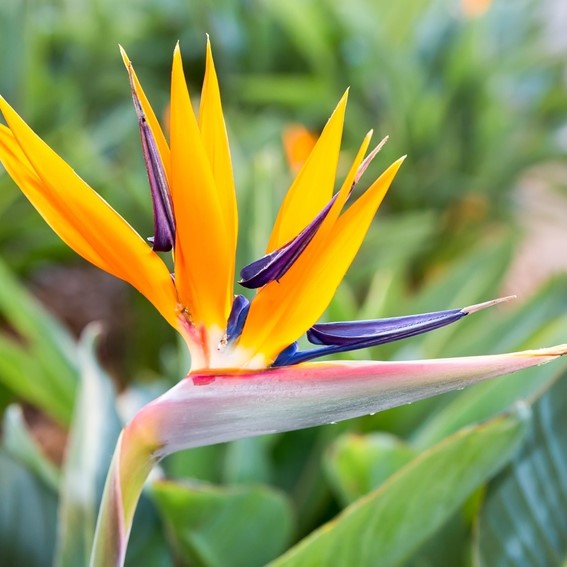
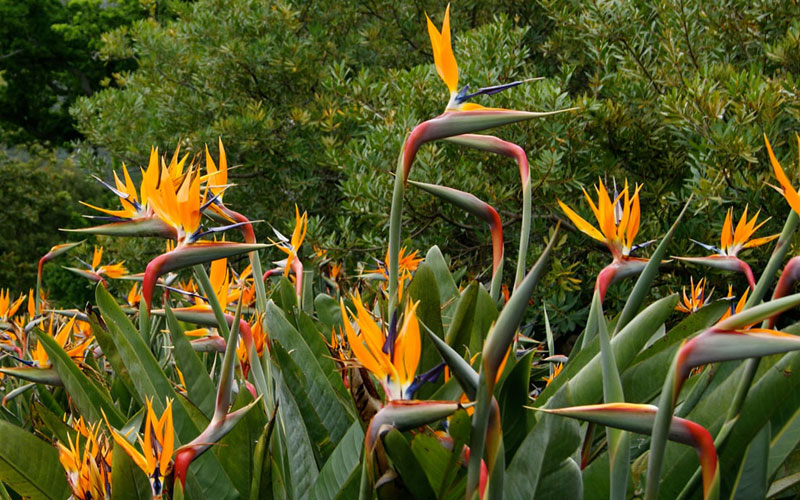
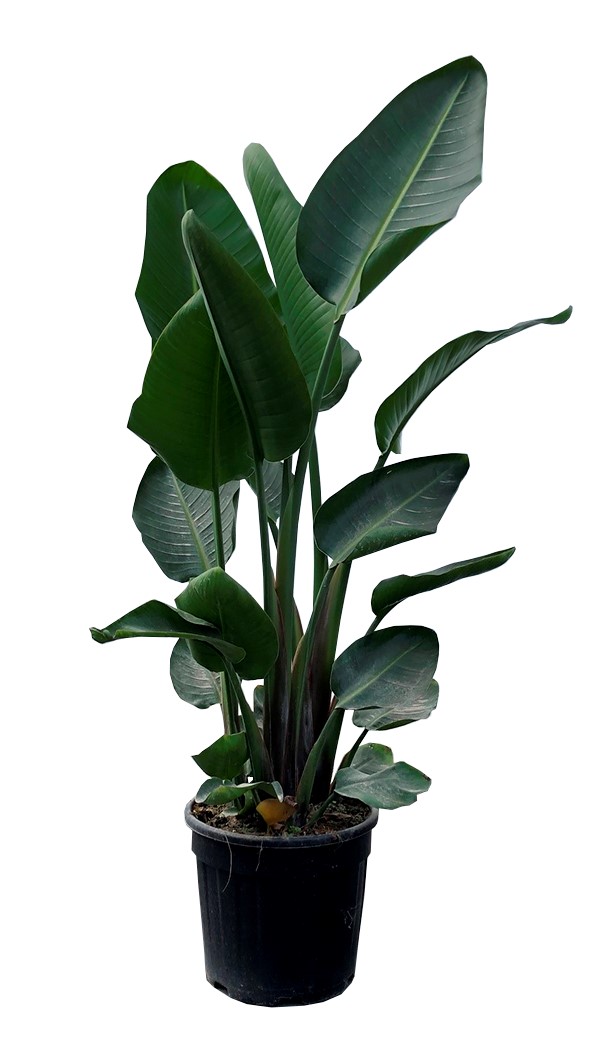
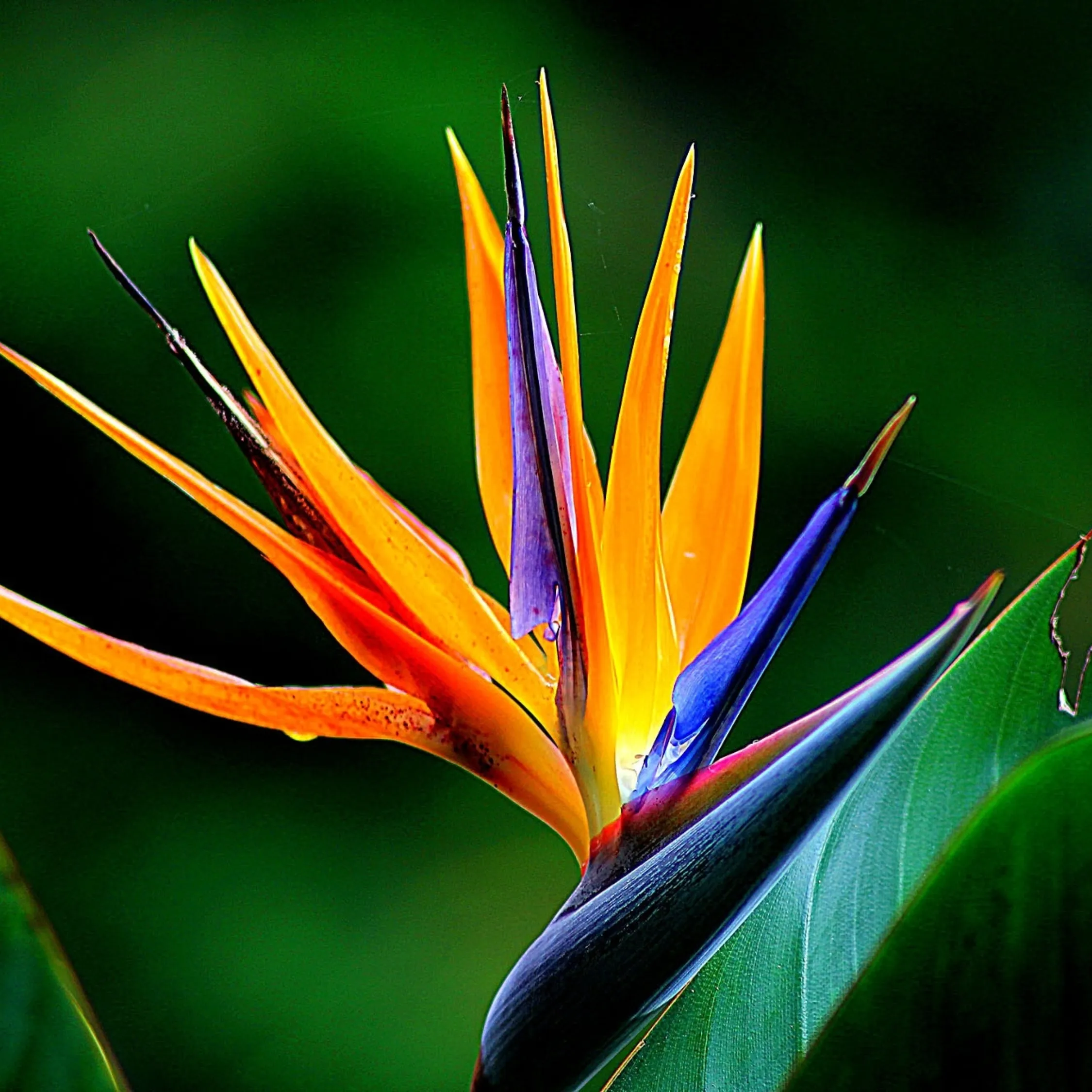
Strelitzias are perennial herbaceous plants that, depending on the species, can grow between two meters (Strelitzia reginae) and ten meters (Strelitzia alba) tall. All species grow in clumps. While Strelitzia nicolai, Strelitzia alba, and Strelitzia caudata form a small trunk and grow like trees, the leaves of the best-known species, Strelitzia reginae, emerge directly from the base. The leaves are green, usually arranged in two rows, very large, and leathery. The flower spikes of the Strelitzia, which are orange-blue or white-greenish depending on the species, emerge from the axils of the leaves. The striking flowers resemble the raised feather crests of birds of paradise, which is why the plant is commonly called the bird of paradise flower.
Care tips
In summer, a Strelitzia has a very high water demand. In winter, however, it should be kept relatively dry. Waterlogging must be avoided at all costs, as the thick, fleshy roots can quickly rot. From March to October, the plant should be fertilized once a month with a standard container plant fertilizer.
Older leaves should be regularly removed, especially in large Strelitzias. This allows the remaining foliage to receive enough light and air to stay healthy and continue growing. About every three years, the plant needs fresh substrate. However, care must be taken not to damage the fleshy roots during repotting or planting. The best time to repot is late spring (March/April).
Important species and varieties
There are five South African species of tree-like and stemless Strelitzias. Tree-like species include the white Strelitzia (Strelitzia alba), the mountain Strelitzia (Strelitzia caudata), and the tree Strelitzia (Strelitzia nicolai). These are only suitable for tall greenhouses, where they are best grown like banana plants. The tree Strelitzia develops towering leaves and, over time, forms a trunk. Its flowers are white-blue, but they only appear after about eight years. The plant can be kept year-round in a conservatory or in bright, warm, and tall living spaces. Smaller specimens can be placed outdoors in summer, for example in a sunny spot on a terrace.
Stemless species include Strelitzia juncea, also known as rush-leaved bird of paradise. It is the smallest of the Strelitzia species. Unlike the others, the leaf blade is almost completely absent, so the plant consists only of grey-green, round stems resembling rushes. It is recommended for smaller greenhouses.
The best known is Strelitzia reginae or the royal bird of paradise. In many countries, it is mainly sold as a cut flower, but it can also be kept in a container. The species has large, greenish, long-stalked, boat-shaped, leathery bracts in which the buds sit in water. From these emerge the striking six petals, with the outer ones orange and the inner ones sky blue. In its native regions, it is pollinated by nectar-feeding birds. The plants produce more and more shoots as they age. Royal Strelitzias adjust their flowering time to their location: if kept in warm and bright indoor spaces during winter, they may bloom as early as December. If kept cooler and in lower light conditions, they bloom in summer instead.
Propagation
The most common method of propagating Strelitzias is division. This is best done when repotting in spring by carefully separating young plants from the mother plant. The cut surfaces on the roots should be dusted with charcoal powder to prevent rot before replanting both the parent plant and the offspring. Young plants should not be placed in direct sunlight and should be watered very sparingly. Use a well-draining, nutrient-rich soil. After a few weeks, the young plants can be transferred to a larger container.
Strelitzia seeds are also available commercially and can be sown in summer in peat pots. Press the seeds about three centimeters into the substrate and water thoroughly with lukewarm water. After sowing, the pots should be kept warm and moist. However, this method requires patience: germination can take several weeks or even months. In addition, it takes six to seven years for a Strelitzia grown from seed to flower for the first time.
(Source: mein-schoener-garten.de)