Fig tree – Ficus carica
The fig (Ficus carica) is one of the oldest cultivated plants on Earth. It is popular here as a container plant, but it also grows outdoors in mild climates.
General information
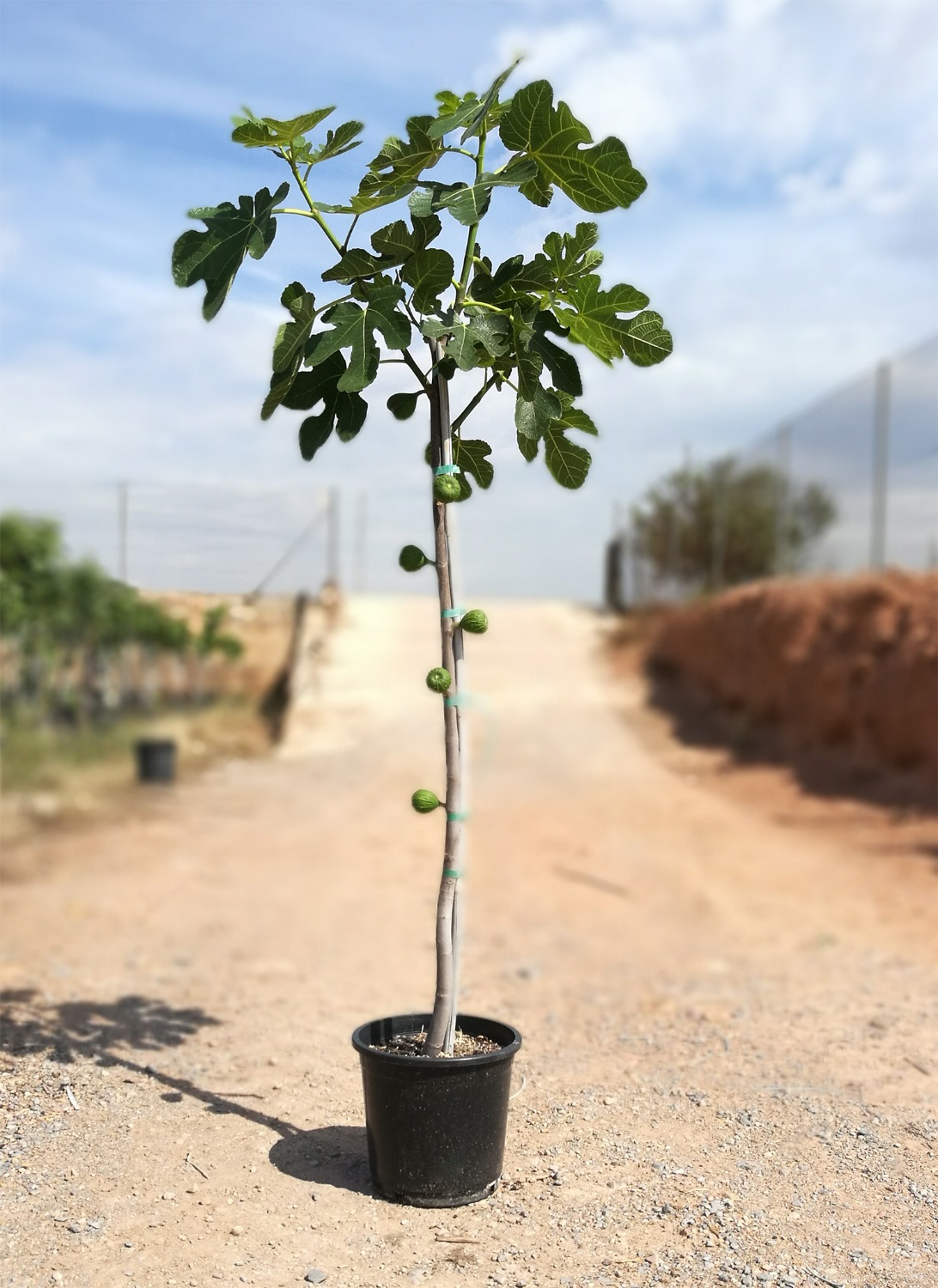
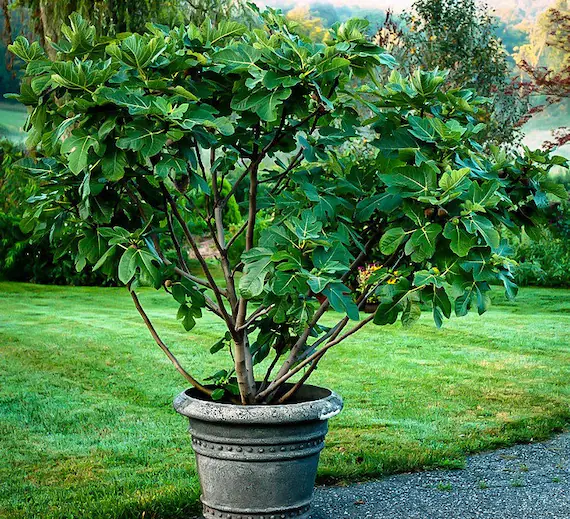
The common fig (Ficus carica), often simply called fig tree because of its fruits, originates from Asia Minor. It is one of the oldest cultivated and useful plants in the world and is very popular here as a container plant. Fig trees are valued for their sweet, edible green or purple fruits. In pots, these Mediterranean plants with their decorative leaves can grow two to three meters tall. The flowers are inconspicuous.
Location
Fig trees are planted either in the garden or in containers. They grow best outdoors in a full sun, sheltered position. However, up to the age of ten, the plants are sensitive to frost. At temperatures below -10°C, the shoots can die back significantly and the roots may also be damaged. In harsher climates, more robust varieties such as ‘Violetta’ or ‘Paradiso’ are therefore better grown in containers.
They should be planted in high-quality container soil. It is best if the root ball is shaded by other plants. In mild regions, figs can flower three times a year, but in our climate even in wine-growing regions, usually only the first crop ripens. Those who grow figs in containers in a greenhouse have the best chance of a rich harvest in autumn.
Harvest
In Mediterranean countries, figs are usually harvested twice a year. The fruits of the first harvest in June or July ripen on last year’s shoots, provided they were not damaged by late frosts. These figs are usually slightly larger than those of the more productive second harvest, which develops on new shoots from August to September. However, these fruits have a higher sugar content.
Since these exotic plants often die back heavily in colder climates, the first harvest is usually rather small.
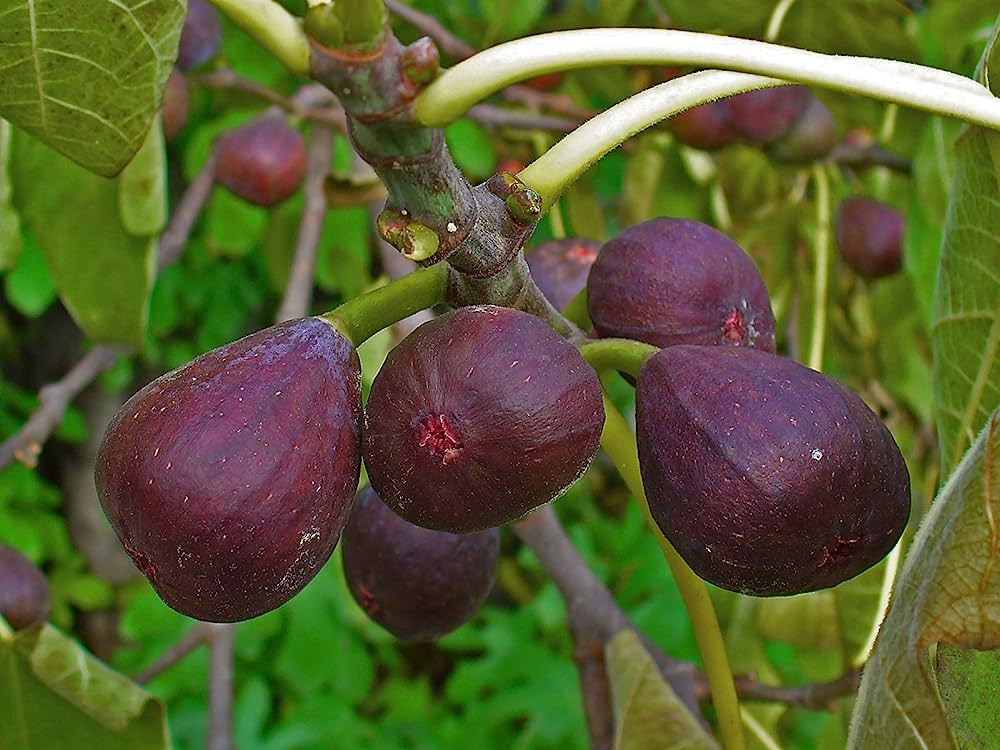
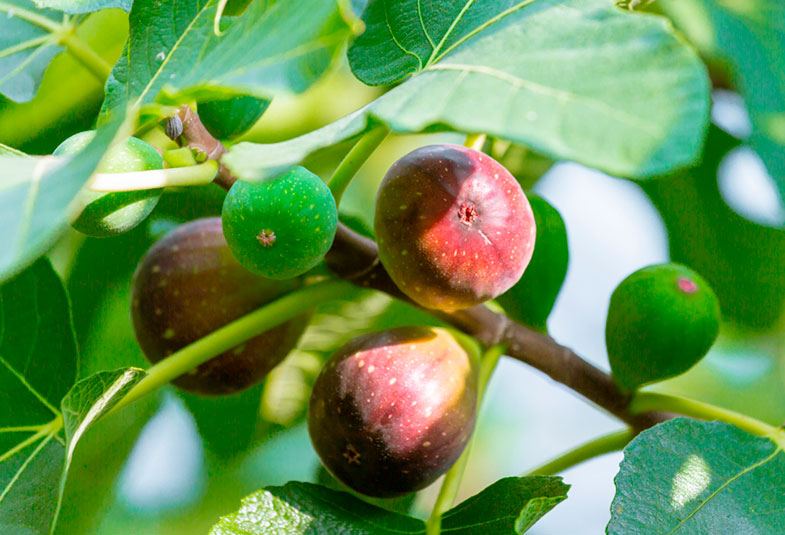
The fruits vary depending on the variety and can be round, oval, or pear-shaped, reaching up to eight centimeters in size. Their skin can be yellow, green, brown, or deep purple. Inside is pink to dark red flesh surrounding many tiny seeds. Because the color varies, ripeness is best judged by touch: if the fruit yields to gentle pressure and tastes sweet, it is ready to harvest.
Figs can be eaten fresh with the skin or used for compote. Drying is also a popular preservation method, although it is usually only successful in an oven.
Frequently asked questions
Can you eat figs with the skin?
Yes, figs can be eaten with their skin, but they should be gently washed first.
When can figs be harvested?
In mild winter regions, figs can be harvested twice a year. Fruits on last year’s shoots are harvested in June or July, while those on new shoots are harvested in August or September.
What do figs look like?
Figs vary by variety and can be round, oval, or pear-shaped, up to eight centimeters in size. They have thin skin that can be yellow, green, brown, or deep purple. The flesh is pink to dark red and surrounds small seeds.
How do you prune a fig tree?
First, remove frozen or overly long shoots. Then remove dense or crossing branches. Always cut back to a bud or branching point.
Is a fig tree hardy?
The common fig is considered frost-sensitive, but it can tolerate some sub-zero temperatures in sheltered locations near walls. Some varieties can even withstand down to -20°C.
How big does a fig tree grow?
The common fig (Ficus carica) grows into a large shrub or small tree. In our regions, it usually reaches three to five meters in height.
(Source: mein-schoener-garten.de)