XERO GARDEN (WATER-SAVING/DROUGHT-TOLERANT GARDEN)
What is Xero garden (water-saving/drought-tolerant garden) and which plants are suitable for a Xero garden?
Xero garden (water-saving/drought-tolerant garden) is a real trend in modern landscaping – both because of its low maintenance requirements and, above all, because of the incredible water savings that result from working in harmony with nature. It offers a way to optimise this resource whilst creating gardens that are not only efficient but also more sustainable. This is essential in a context where summers are getting hotter and water is becoming increasingly scarce.
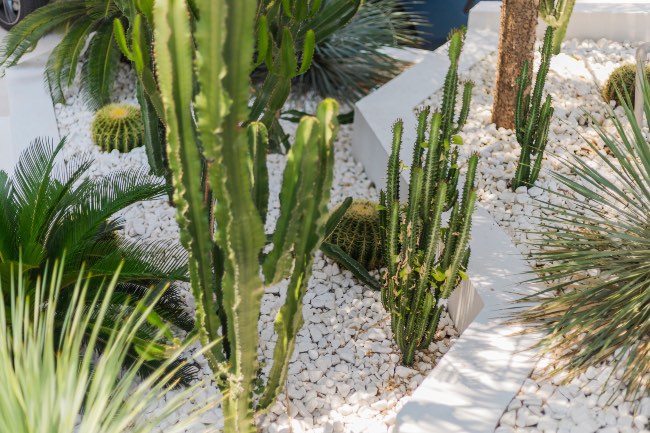
However, although the topic is highly topical, xeriscaping remains largely unknown. For many, it simply means using cacti in outdoor spaces or removing plants that consume a lot of water, such as lawns. Far from these two myths, it is in fact a landscape design discipline that combines design, the right choice of plant species and efficient water management. The aim: to create resilient and low-maintenance green spaces.
WHAT EXACTLY IS A XERO GARDEN?
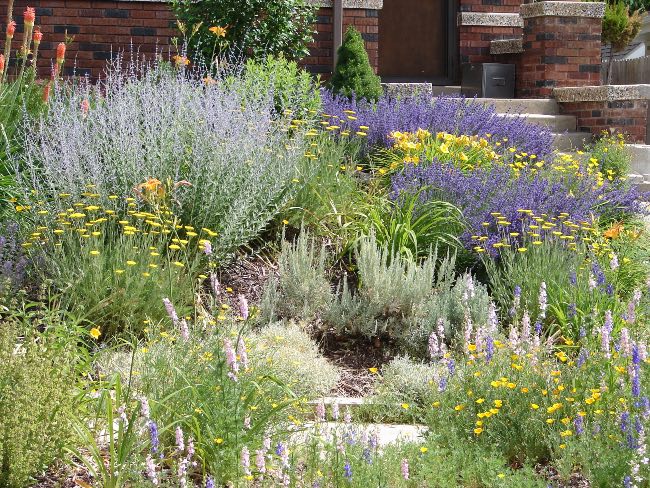
Let’s start by understanding exactly what a Xero garden is: it is a gardening technique based on designing gardens that require very little water. However, this does not necessarily mean that these gardens must be barren or devoid of vegetation. In fact, a Xero garden can be lush, fragrant and decorative.
To achieve this result, the starting point is selecting plants that are drought-resistant or adapted to dry conditions. These are planted in suitable growing media, alongside techniques that reduce water evaporation to optimise watering.
Although a xeriscape can be designed to suit any location, it is particularly well-suited to climates with dry, hot summers. This allows you to enjoy a natural environment that is adapted to the local climatic conditions.
And what is Mediterranean xeriscaping?
It is not just a trend. Mediterranean Xero gardening (dry landscaping) is about designing outdoor spaces in line with the specific characteristics of these regions, where summers are long, hot and dry, and autumn and spring bring abundant rainfall. It is a landscaping approach which, whilst consistent with the philosophy and implementation of a Mediterranean garden, focuses on creating an aesthetic, functional and species-rich outdoor space using native plant diversity.
Mediterranean xeriscaping draws inspiration from the natural landscape of the Mediterranean region, where aromatic plants, hardy shrubs and small-leaved species predominate.
BASIC PRINCIPLES OF XERO GARDEN DESIGN
- Strategic spatial planning – the starting point for a Xero garden
What is crucial in any garden applies even more to a Xero garden. Before we begin work, it is important to identify the characteristics of our outdoor space by assessing aspects such as sun exposure, soil type, wind exposure and slope. This serves as a guide to knowing where to plant which species.
It is equally important to group plants with similar watering requirements: a way of optimising water consumption and making maintenance easier.
This is not only practical but also helps to save water used for irrigation.
Finally, bear in mind that a xeriscape garden incorporates decorative gravel, rockeries and stone paths into its design. Whilst this is a common feature in garden design, in this case it takes on a different dimension. The inclusion of these decorative elements reduces the area of lawn – a major consumer of water.
- Selecting suitable plants for a dry garden – crucial
and the foundation for the functioning and health of any dry garden. The plants recommended for dry gardens share common physical characteristics, in addition to their ability to survive without much watering:
- They generally have small leaves to minimise evaporation
- They are characterised by fleshy tissue that stores water
- They often develop deep roots
- They are naturally adapted to dry climates with low rainfall.
- Soil designed for optimal water use
A fundamental aspect. The substrate in a xeriscape garden does not merely serve to house the roots of the plants growing in it. It must also ensure that the plants can make better use of the available water. For this reason, it is essential that it is well-balanced, to promote proper root development on the one hand and reduce water stress on the other.
In Xero Garden design, the soil should:
- contain organic matter
- promote drainage
- prevent compaction
- Efficient watering
Opting for a xeriscape garden does not mean watering at all but rather making the most of every drop. For this reason, when choosing watering systems for the garden, we should always opt for those that ensure the most efficient use of water possible.
The following irrigation systems are therefore ideal for a xeriscape:
- Drip irrigation, micro-sprinklers, deep irrigation
- Use of mulch to optimise water use
Mulching is one of the most used techniques in gardening, and it plays a particularly important role in a xeriscape. In this type of garden design, mulch:
- Reduces evaporation, thereby optimising water consumption
- Retains soil moisture
- Suppresses weeds, which not only consume resources but also act as a breeding ground for pests
- Improves the garden’s appearance
WHAT ARE THE BENEFITS OF A XERO GARDEN?
Aside from its aesthetic appeal, Xero garden design offers some interesting advantages over a conventional garden, which also have a positive impact on the environment. So, if you’re thinking about how to create a sustainable, low-maintenance garden, you should consider this option and enjoy its benefits.
- Water savings – the most interesting aspect
It is estimated that a garden designed according to the principles of this style can save between 60% and 70% of water. That’s a significant difference compared to a traditional garden.
- Less maintenance – ideal for practical people or those short of time
As these are drought-resistant plants, they require less watering. And not only that: they generally require less maintenance too, including pruning.
- More sustainable
Xeriscaping not only helps to make better use of natural resources, but also promotes biodiversity, provided we choose plants that are adapted to our environment and thus replicate natural conditions.
RECOMMENDED PLANTS FOR DRY GARDEN DESIGN
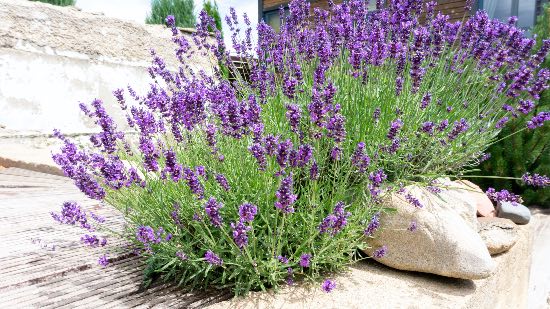
Fragrant plants (e.g. lavender)
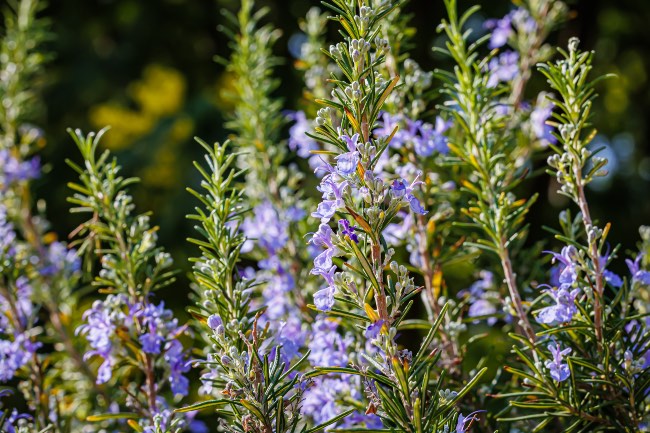
Hardy shrubs (e.g. rosemary)
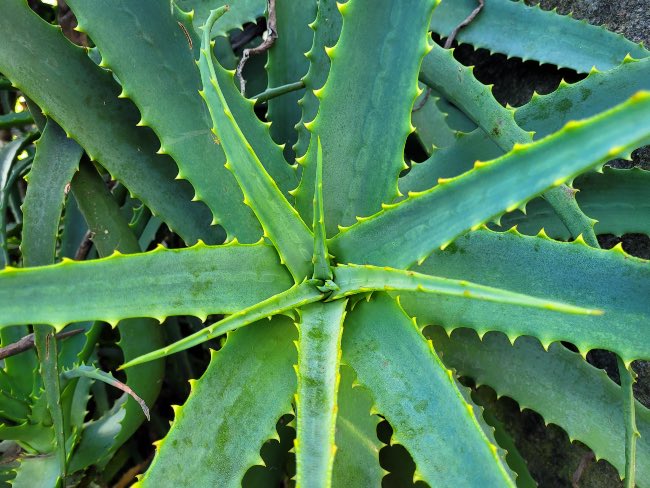
Fatty plants and succulents (e.g. agave, aloe vera, euphorbia)
Climbing plants (e.g. bougainvillea, star jasmine)
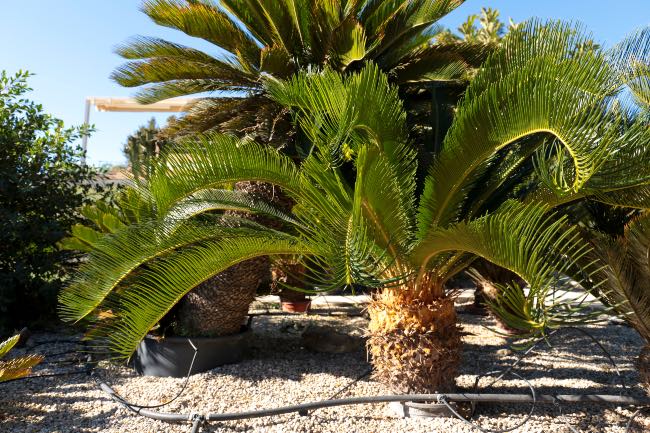
Palms (e.g. Washingtonia, Trachycarpus)
Fruit trees (e.g. olive tree, pomegranate tree, fig tree)
All these plants are available from Zimmermann Plantas y Logística
(Source: verdecora.es)