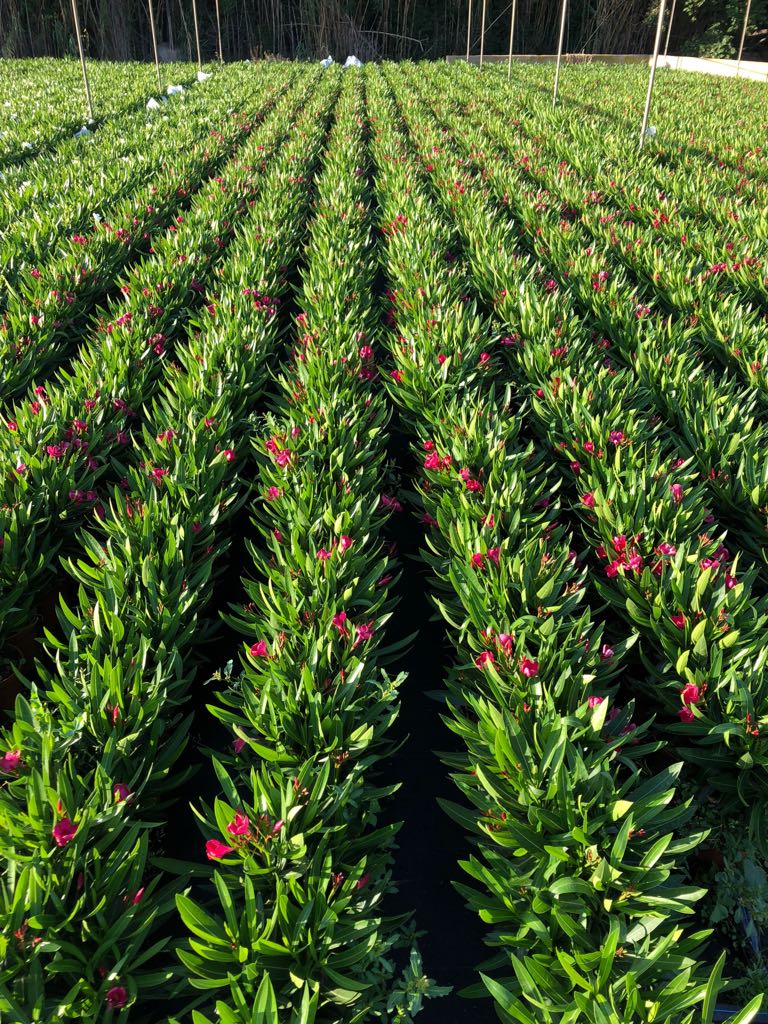
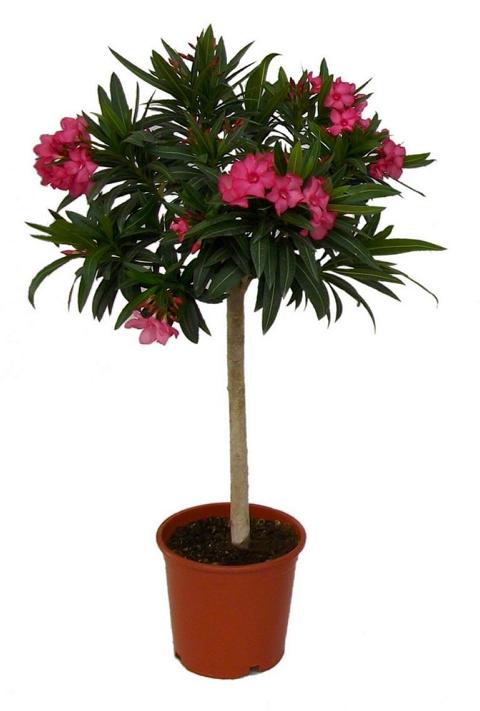
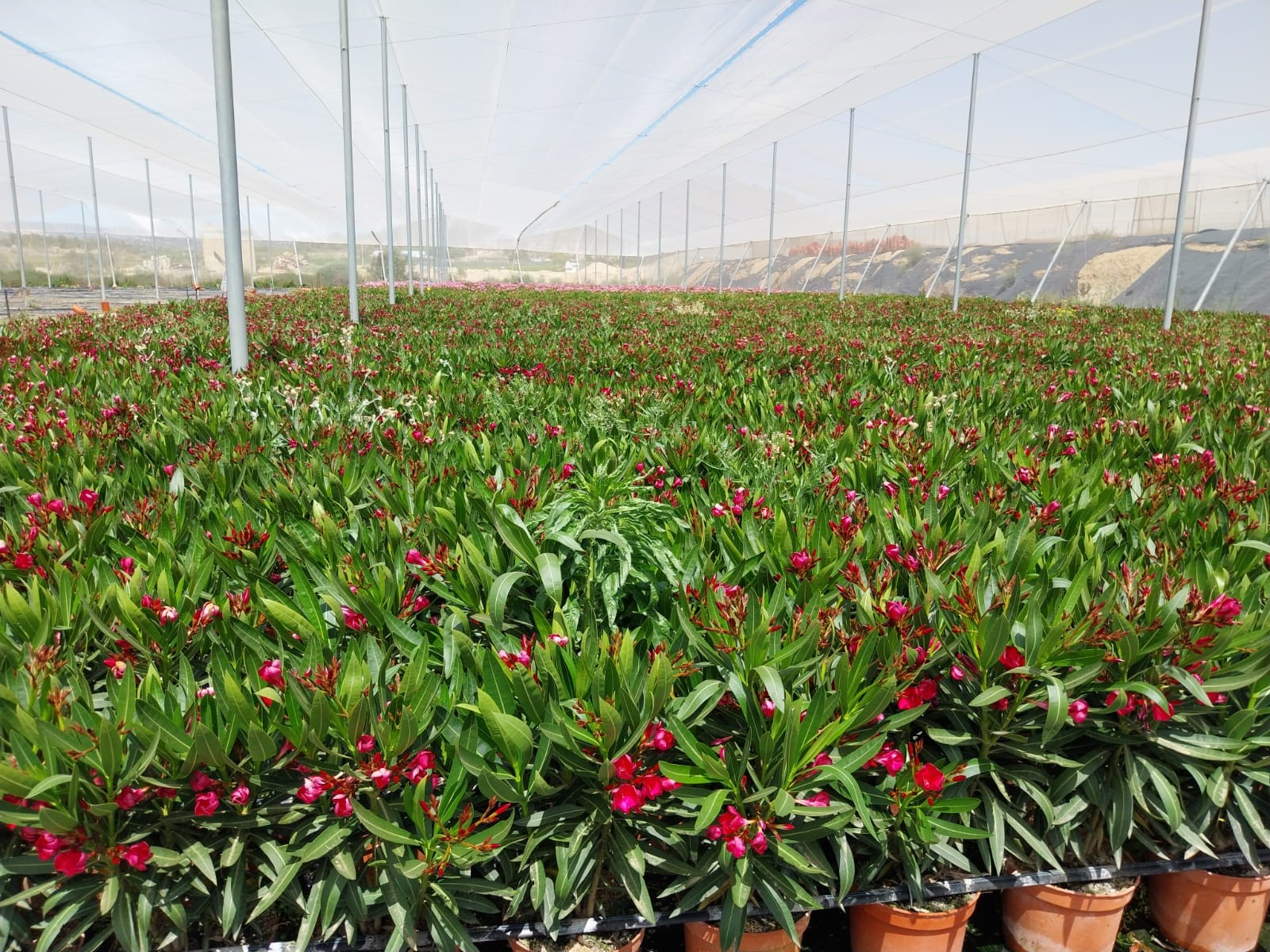
NERIUM OLEANDER
Origin
The oleander (Nerium oleander), also known as rose laurel, is the only species in its genus and belongs to the dogbane family (Apocynaceae). This flowering shrub is one of the oldest and, thanks to its abundant blooms, one of the most popular Mediterranean container plants. It originally comes from Morocco and southern Spain and is now widespread throughout the Mediterranean region, as well as in India and China. The evergreen shrub was already valued in antiquity, as shown by Cretan wall paintings from the 14th century BC. Oleander was introduced to Germany around 500 years ago. At that time, it was reserved for the nobility and wealthy citizens, who used it to decorate their orangery collections with this southern beauty.
Growth
This evergreen shrub can reach a height of two to four meters and a width of up to three meters.
Leaves
The fleshy, leathery, lance-shaped leaves grow up to 20 cm long and about 3–4 cm wide. Three leaves grow at each node—botanists refer to this as a whorled leaf arrangement.
Flowers
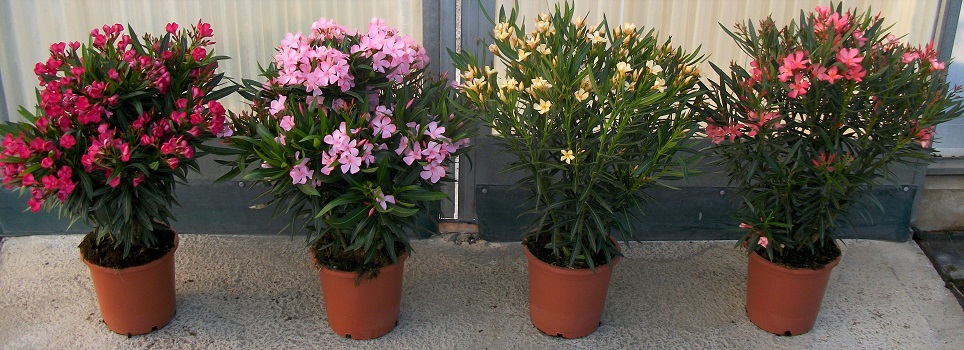
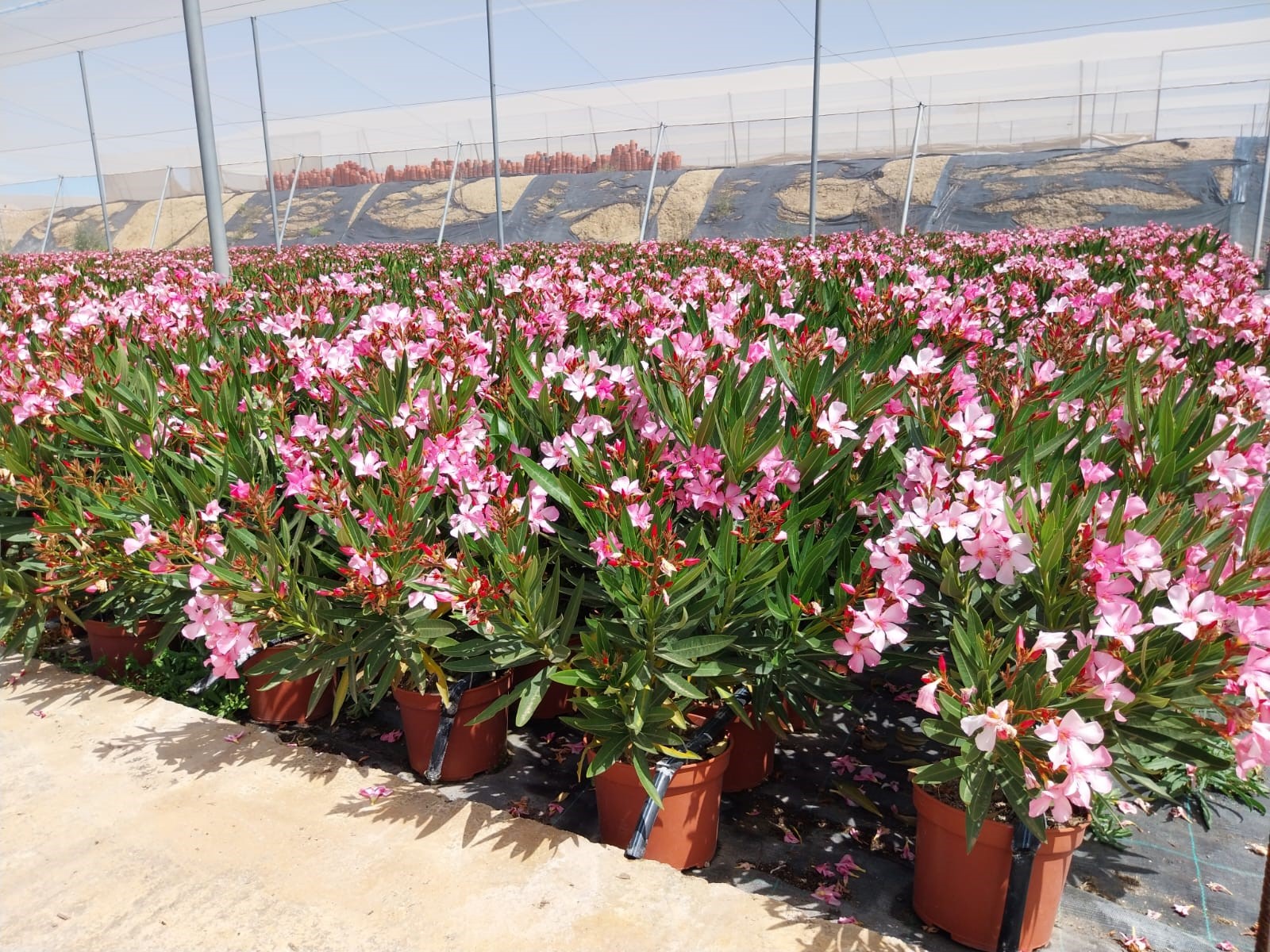
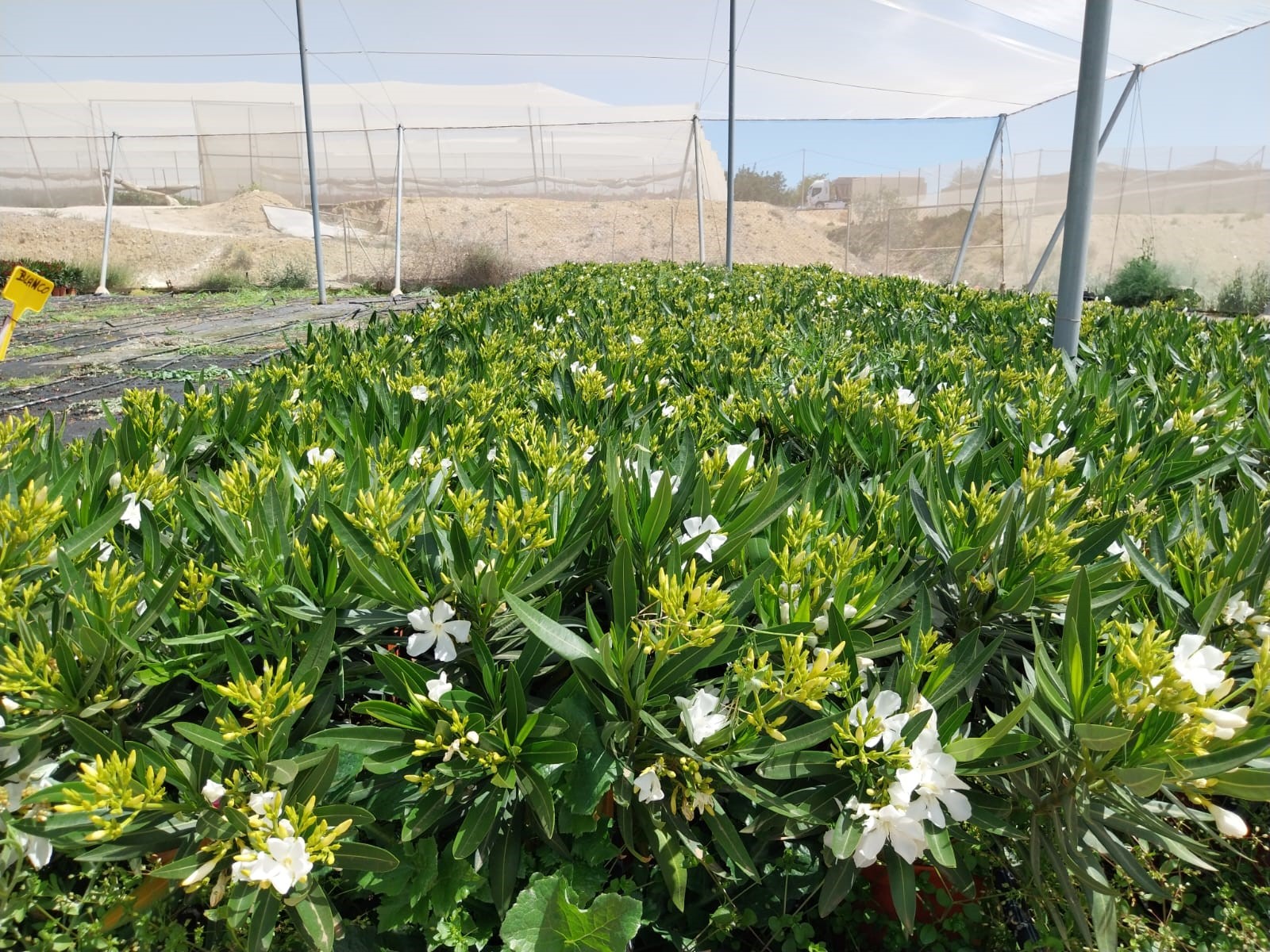
At the branched shoot tips, clusters of several flowers form. Wild forms have five petals and bloom in pink or white. Through extensive breeding, there are now over 400 oleander varieties in many colors: light and dark pink, salmon, pale yellow, white, and red. Some varieties produce double or lightly scented flowers that appear from June to September.
Warning: Like the devil’s trumpet tree, oleander belongs to the dogbane family (Apocynaceae) and is highly toxic.
Location
For abundant flowering, these Mediterranean plants need a sunny, wind-protected position. The more sun oleander receives, the more flowers it produces. In cool, rainy summers, it blooms significantly less. Double-flowered varieties should be kept in a rain-protected spot, as their dense blooms absorb water, become sticky, and may rot.
Watering oleander
Oleander is very thirsty, so it should be watered generously in summer. On very hot days, large plants may need watering up to three times a day. Ideally, place the pot on a deep saucer to collect excess water, which the plant can absorb later during the day. Oleander naturally grows in river floodplains, so wet roots are not a problem—its pot can even stand partially in water.
However, it does not tolerate rainwater over long periods, as it makes the container soil too acidic. The plant prefers calcareous soil and therefore also benefits from tap water with lime. Lukewarm water promotes flowering. Tip: Water at soil level only—do not spray from above, as moisture on the flowers can damage them and promote oleander canker.
(Source: mein-schoener-garten.de)