Pomegranate Tree (Punica granatum)
Origin
The pomegranate tree (Punica granatum), a member of the loosestrife family (Lythraceae), has been valued as both an ornamental and fruit-bearing plant for thousands of years. Its exact place of origin remains uncertain, although it is believed to have originated in Southeastern Europe and Western Asia.
Its botanical name, Punica, refers to the ancient region of Punia (present-day Tunisia). The pomegranate was already widely cultivated throughout the Mediterranean during antiquity, and wild forms can still be found in some areas today.
Throughout history, the pomegranate has been regarded as a symbol of fertility due to its abundance of seeds and striking fruit color. It appears in Greek mythology, the Quran, and the Bible, where it is associated with fertility, power, prosperity, and life. The Romans learned about the fruit through the Carthaginians and called it Malum Punicum, meaning “the Apple of Carthage.” Later, the Arabs introduced and expanded its cultivation in Europe through Andalusia, to such an extent that the Spanish city of Granada was named after the fruit.
Growth Habit
The pomegranate grows as a densely branched large shrub or small tree with angular young branches that become rounded with age. Its bark is grayish-brown, and lateral branches often terminate in long thorns.
When grown in containers, the tree typically reaches up to 3 meters (10 feet) in height. In favorable garden locations and mild climates, it can grow up to 5 meters (16 feet) tall and live for well over 100 years. Many varieties are also cultivated as shrubs, while dwarf and ornamental cultivars generally remain below 1.5 meters (5 feet).
Flowers
The pomegranate produces spectacular bell-shaped flowers measuring 5–6 cm (2–2.5 inches) across in vibrant orange-red tones. Depending on winter conditions, flowering occurs from June through September.
The flowers are self-fertile and pollinated by insects. Ornamental varieties often feature larger, double flowers in shades of deep red, white, or creamy yellow.
Fruit
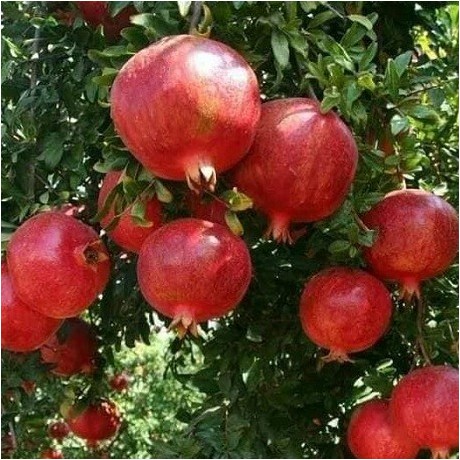
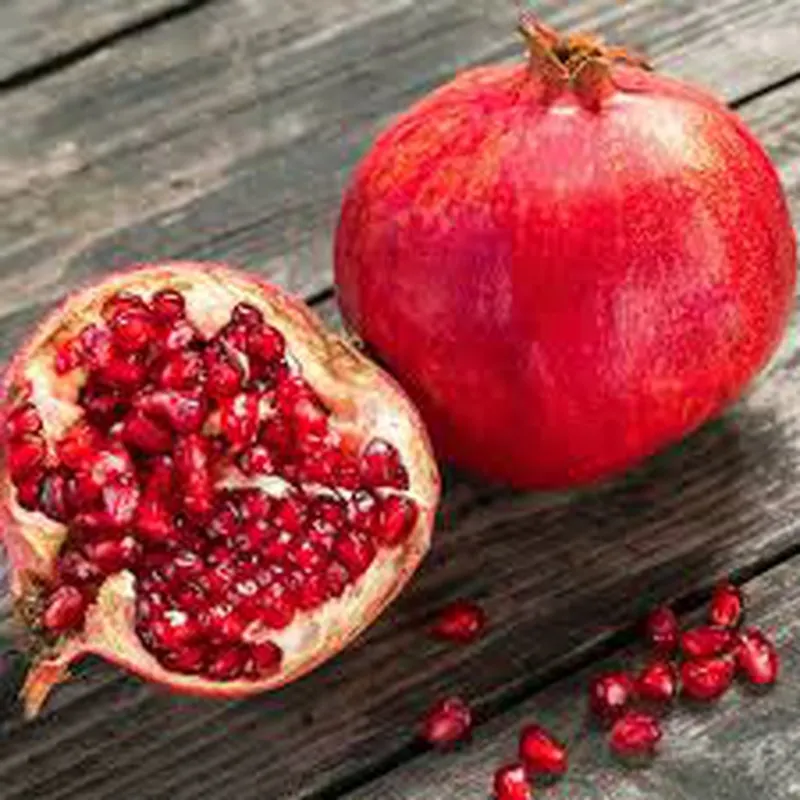
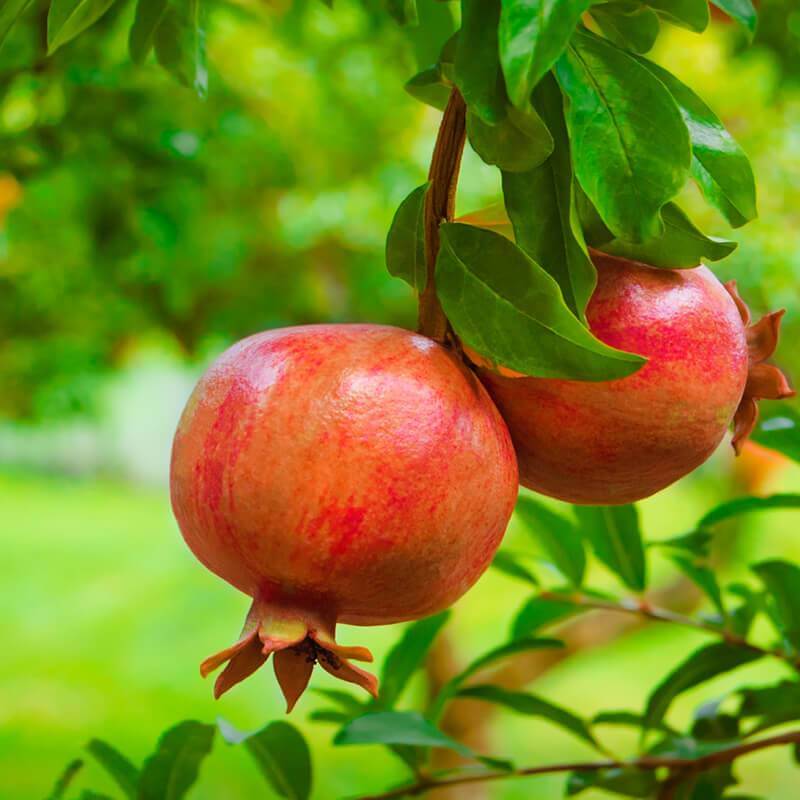
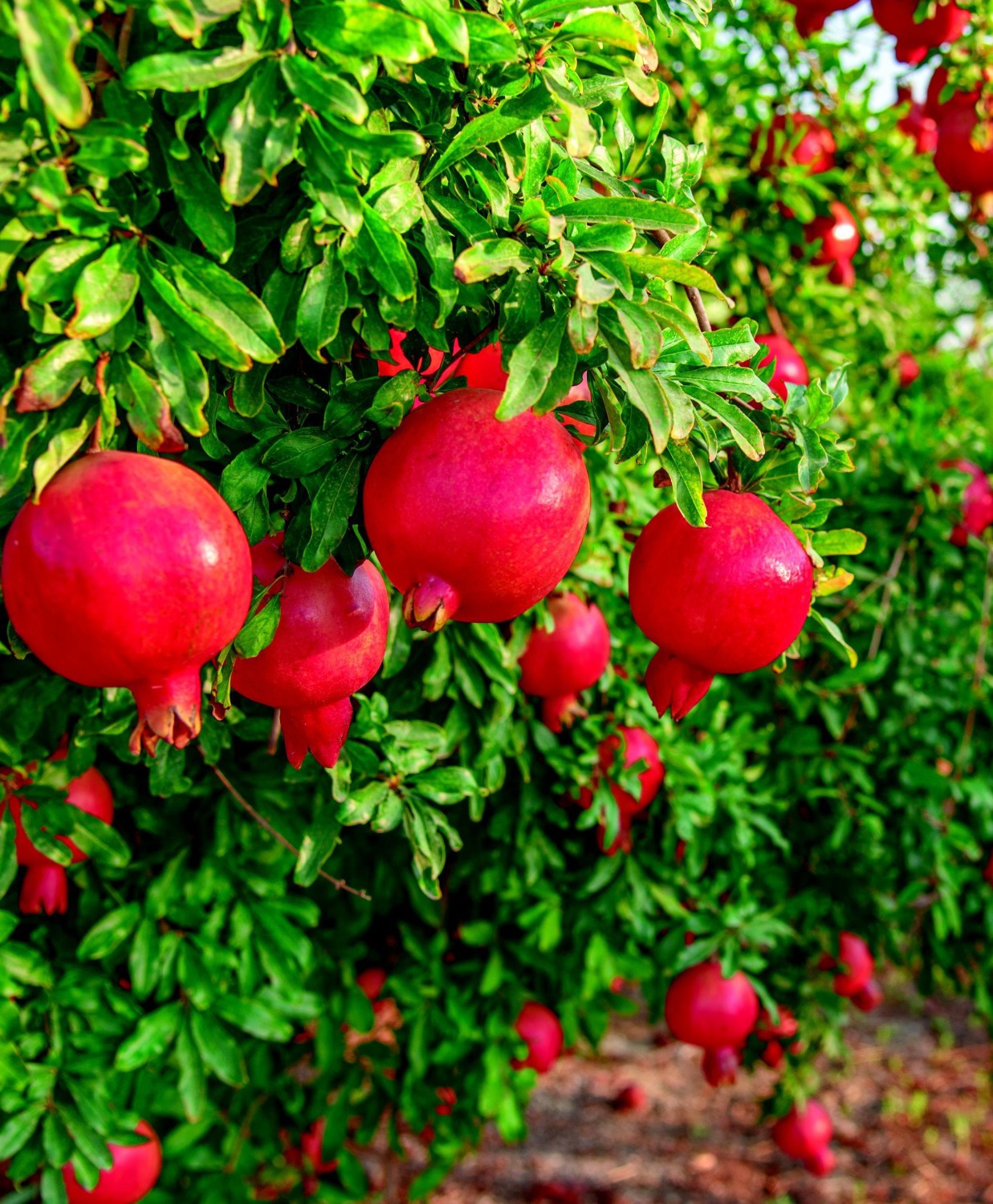
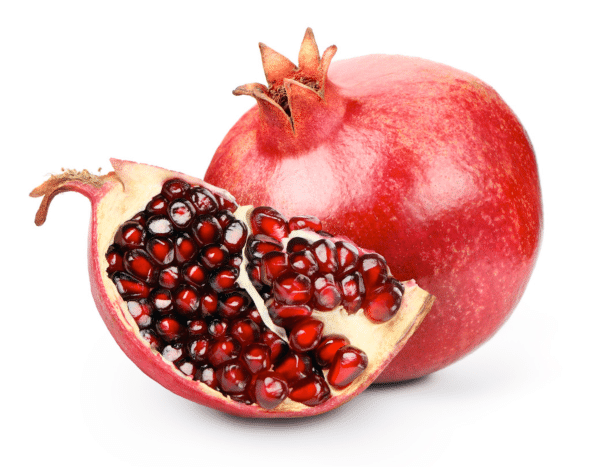
The tree produces round, apple-sized fruits known as pomegranates. Their color ranges from yellow-brown to deep red, and they typically reach about 10 cm (4 inches) in diameter.
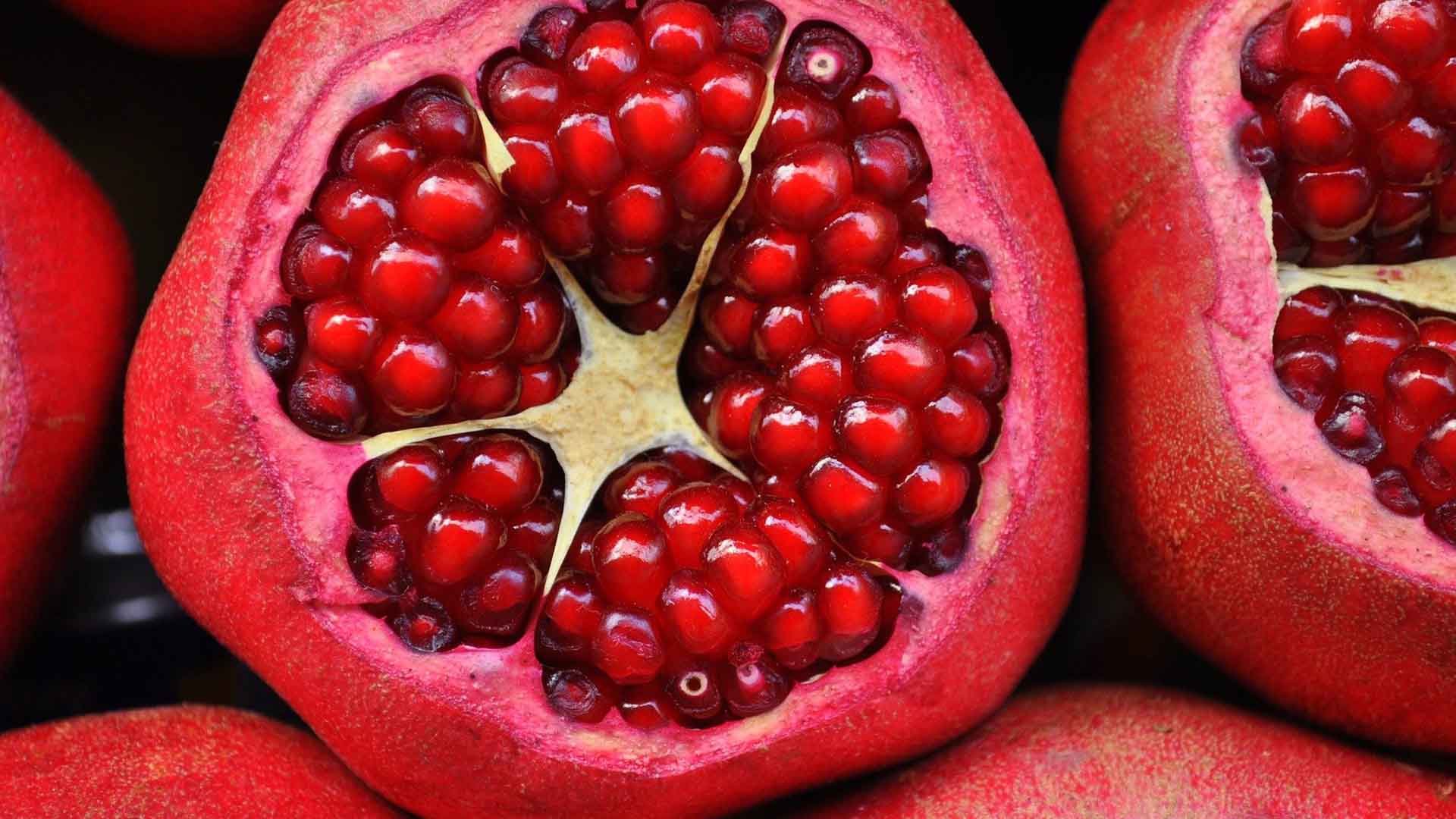
These highly decorative fruits have a tough, leathery skin and contain hundreds of edible seeds. Each seed is surrounded by juicy, ruby-red flesh with a sweet-tart flavor. The seeds can be enjoyed fresh or used to make juice, syrups, desserts, and a variety of culinary preparations.
In ancient times, pomegranates were an important food source for sailors because the fruits could be stored for up to six months while continuing to develop flavor. Their vitamin C-rich juice also helped prevent deficiency diseases such as scurvy during long voyages.
Cultivation and Care
Pomegranate trees thrive in sunny, well-ventilated locations. Planting is best carried out in late spring to avoid damage from late frosts, as young plants can be sensitive to cold.
Although adaptable to different soil types, pomegranates perform best in deep, fertile, well-drained soils rich in organic matter. Their extensive root system benefits from loose, permeable soil conditions.
The tree prefers temperate to warm climates. Cold tolerance varies by cultivar, with some varieties surviving temperatures as low as -12°C (10°F), while others tolerate only around -5°C (23°F).
While pomegranates are highly drought-resistant, regular watering during summer promotes healthy growth and fruit production. Organic fertilizer applied at the end of winter is beneficial. Every three to four years, pruning should be carried out to remove dead, weak, or crossing branches and maintain an open, healthy canopy.
Pomegranate as a Medicinal Plant
Pomegranates have long been valued for their health-promoting properties. During the Middle Ages, the seeds and juice were commonly used to treat digestive ailments.
Scientific studies have shown that punicalagin, a compound found in pomegranates, possesses antiviral and anti-inflammatory properties. When consumed as juice, tablets, or supplements, the fruit’s flavonoids may contribute positively to cardiovascular health and help support healthy blood pressure levels.
Some research also suggests that pomegranate compounds may help alleviate menopausal symptoms. Potential benefits in relation to prostate cancer are currently being investigated, although further scientific evidence is still required.
What is well established is the fruit’s exceptionally high antioxidant content. Rich in polyphenols and flavonoids, pomegranates help protect cells from oxidative stress and environmental damage. Pomegranate juice contains remarkably high levels of these beneficial compounds—often exceeding those found in red wine or grape juice.
Because of its antioxidant properties, the pomegranate is frequently regarded as a natural anti-aging fruit. Pomegranate seed oil is widely used in skincare products, where it may help improve skin firmness and reduce the appearance of fine lines. In addition, pomegranates are an excellent source of potassium, B vitamins, and essential trace minerals such as iron.
A Symbol of Beauty and Wellness
Combining ornamental beauty, delicious fruit, and remarkable health benefits, the pomegranate tree remains one of the most treasured plants of the Mediterranean world. Its vibrant flowers, striking fruits, and rich cultural history make it an exceptional addition to gardens, terraces, and landscapes alike.