Some palm trees are considered relatively hardy and can even be planted in gardens in milder regions. You can find out which ones here.
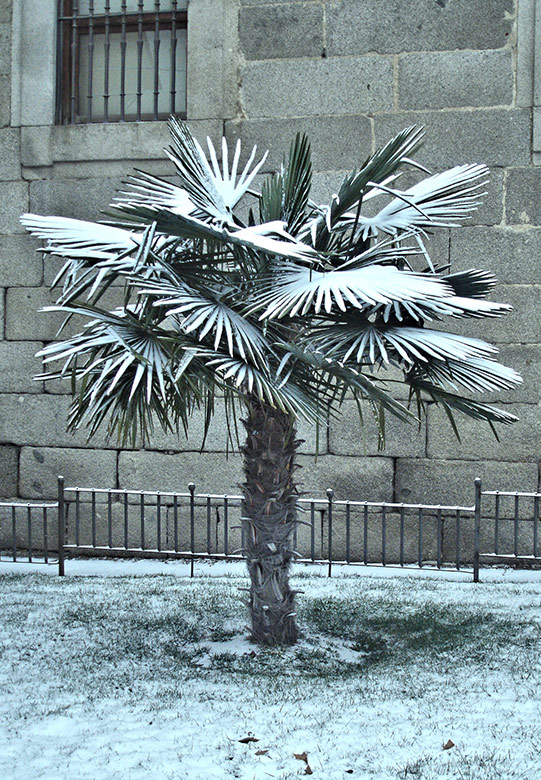
Hardy palms also bring an exotic touch to the garden during the cold season. Most tropical palm species are kept indoors all year round, as they need a lot of warmth to thrive. However, this does not mean you have to give up having a palm tree in the garden. Some species are considered hardy—meaning they can temporarily tolerate temperatures down to around -12°C and can survive the winter outdoors when planted in the garden. Depending on the region, even hardy palms still require a sheltered location as well as some protection from moisture and winter conditions.
Planting hardy palms correctly
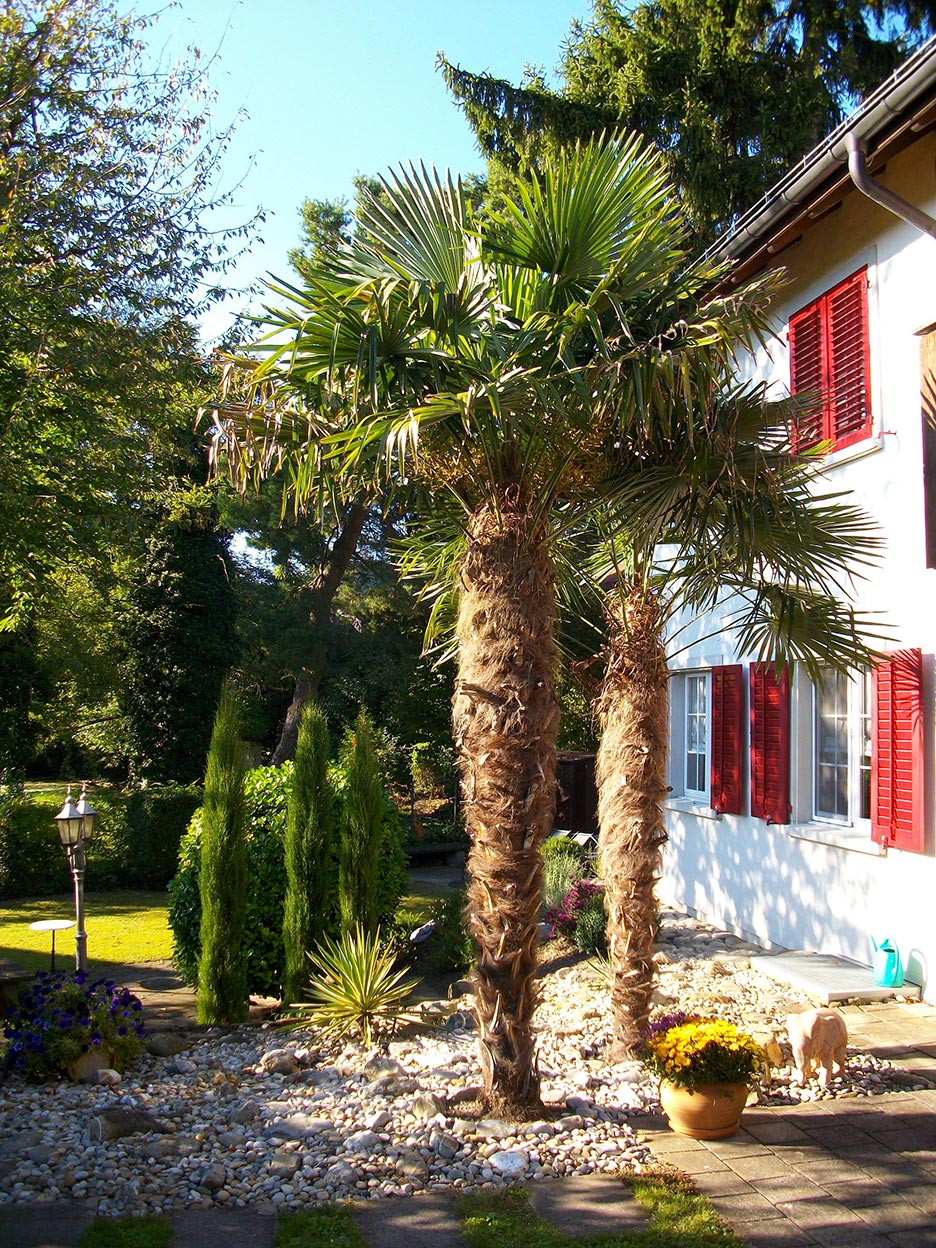
The best time to plant hardy palms in the garden is from May to June. This gives these exotic plants enough time to acclimatize to their new location before the first winter. To ensure they survive the winter months in Germany, palms should generally be planted in a location protected from wind and rain. A warm spot in front of a south-facing wall is ideal. You should also gradually acclimatize the palm to direct midday sun. Good soil drainage is essential. To prevent harmful waterlogging, a drainage layer of gravel is usually recommended. It is also important to note that young palm plants are generally more sensitive to frost.
Hardy palms: suitable species for the garden
Chinese windmill palm
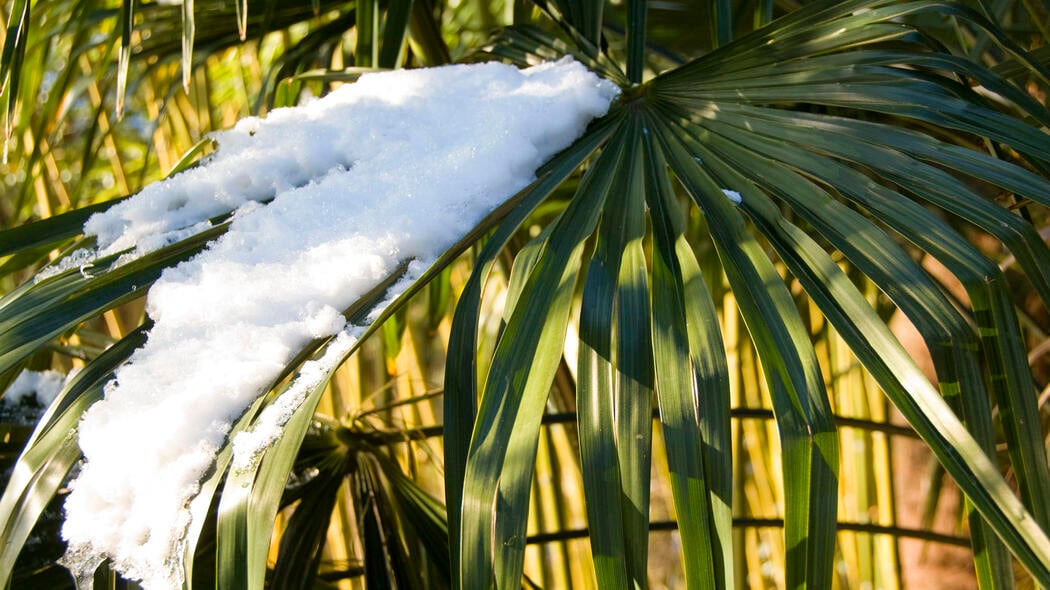
The Chinese windmill palm (Trachycarpus fortunei) can temporarily withstand temperatures between -12 and -17°C and is therefore one of the hardiest palm species for our climate. As its name suggests, this popular fan palm originally comes from China, where it is regularly exposed to longer periods of frost, ice, and snow.
A characteristic feature of the Chinese windmill palm is its gnarled trunk, which is covered with fibers from old leaf bases. Depending on location and climate, it can grow between four and twelve meters tall. Its fan-shaped fronds are particularly decorative. Trachycarpus fortunei thrives best in a sunny to partially shaded, wind-protected spot in the garden. During dry summer months, it benefits from additional watering. If prolonged ground frost occurs, the root area should be covered with a thick layer of bark mulch.
Wagner’s windmill palm
Another hardy palm is Wagner’s windmill palm (Trachycarpus wagnerianus). It is believed to be a smaller cultivated form of Trachycarpus fortunei. It also has a fibrous trunk and can temporarily withstand temperatures between -12 and -17°C in the garden. With its sturdy, rigid fronds, this palm is even better suited for windy locations. Otherwise, Trachycarpus wagnerianus has very similar site and care requirements to T. fortunei.
Utilizamos cookies propias y de terceros para mejorar nuestros servicios y la experiencia de uso de este sitio web. Al continuar con la navegación entendemos que se acepta nuestra política de cookies.