HIBISCUS
Origin
The genus Hibiscus, also known as rose mallow, includes several hundred species native to Asia. Today, these plants are widely distributed throughout tropical and subtropical regions around the world. Hibiscus belongs to the large mallow family (Malvaceae).
The genus comprises annual and perennial herbaceous plants, subshrubs, shrubs, and even small trees. As a houseplant or container specimen, the Chinese Hibiscus (Hibiscus rosa-sinensis) is particularly popular. In temperate European gardens, only the hardy Rose of Sharon (Hibiscus syriacus) and cultivated forms of the hardy perennial hibiscus (Hibiscus × moscheutos) are generally suitable for outdoor cultivation.
Appearance and Growth Habit
Rose of Sharon (Hibiscus syriacus)
Also known as garden hibiscus, Rose of Sharon is an upright, vase-shaped shrub that can reach up to 3 meters (10 feet) in height and 1.5–2 meters (5–6.5 feet) in width. It is relatively slow-growing and typically leafs out late in spring.
Its glossy medium-green leaves are pointed, ovate, and distinctly three-lobed. From August onwards, large trumpet-shaped flowers appear at the ends of the branches. The species naturally bears single violet flowers, but numerous cultivars are available in shades of white, pink, red, purple, and blue, with both single and semi-double blooms.
Many varieties feature a striking dark red center that radiates outward in a star-like pattern. Like many members of the mallow family, hibiscus flowers have fused stamens that form a prominent central column, from which the three-branched style extends. After pollination, small seed capsules develop and often remain on the plant throughout winter.
Chinese Hibiscus (Hibiscus rosa-sinensis)
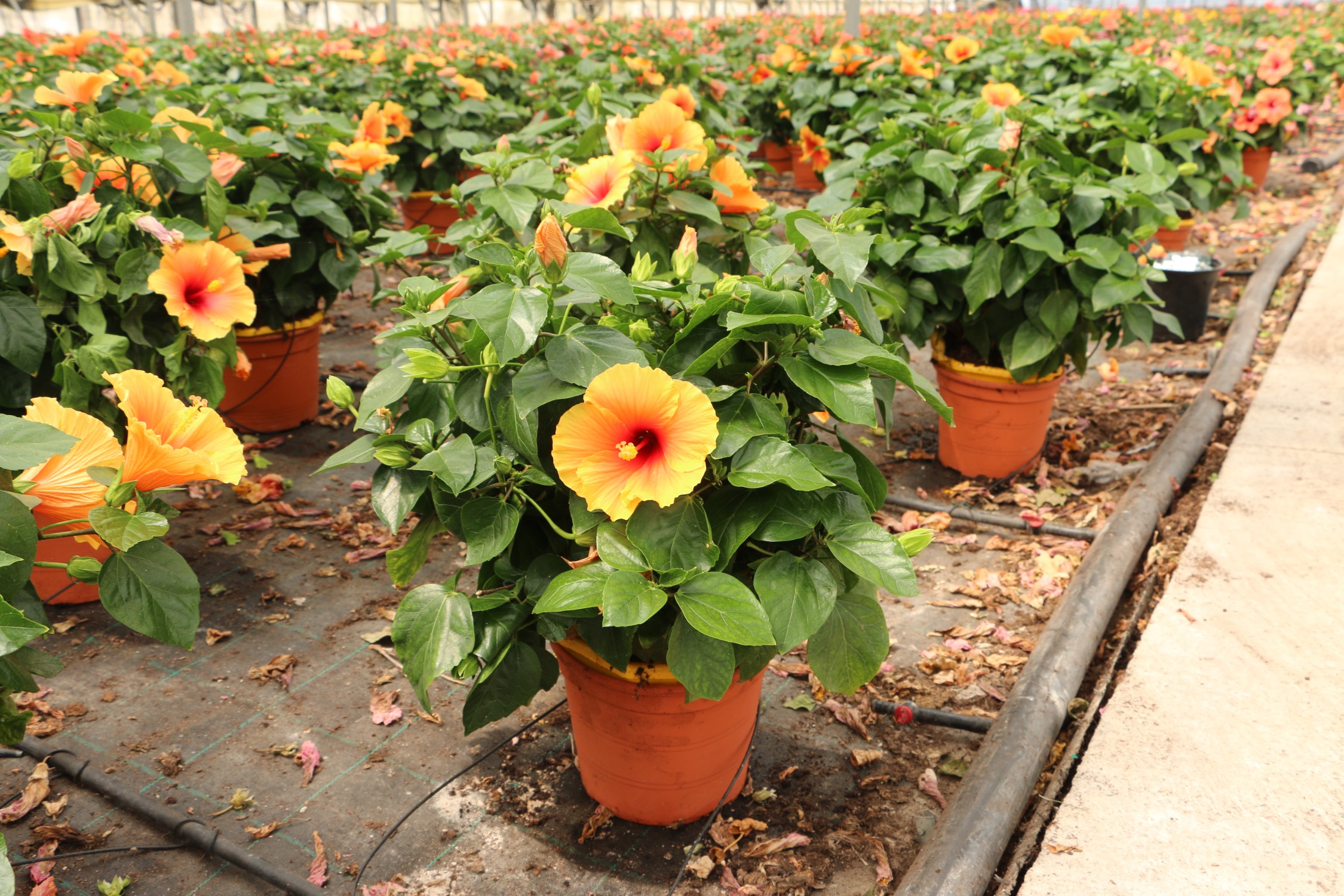
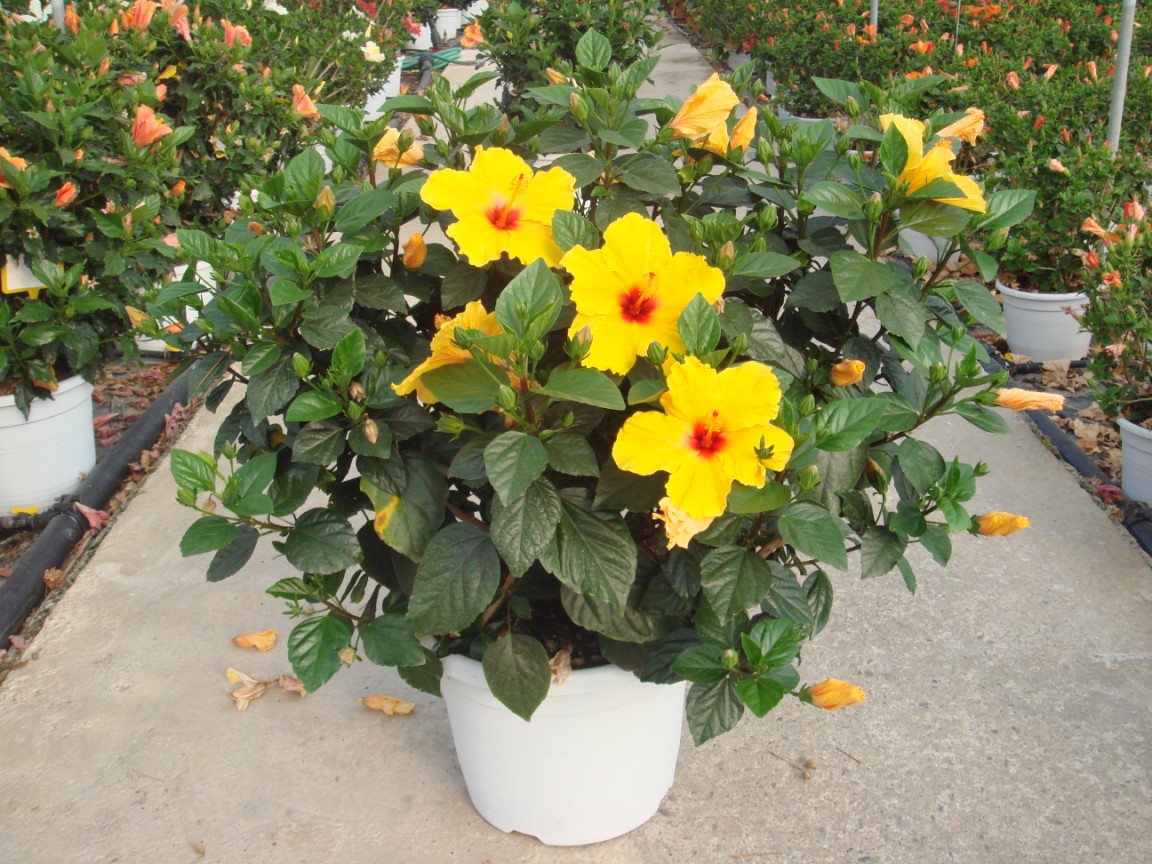
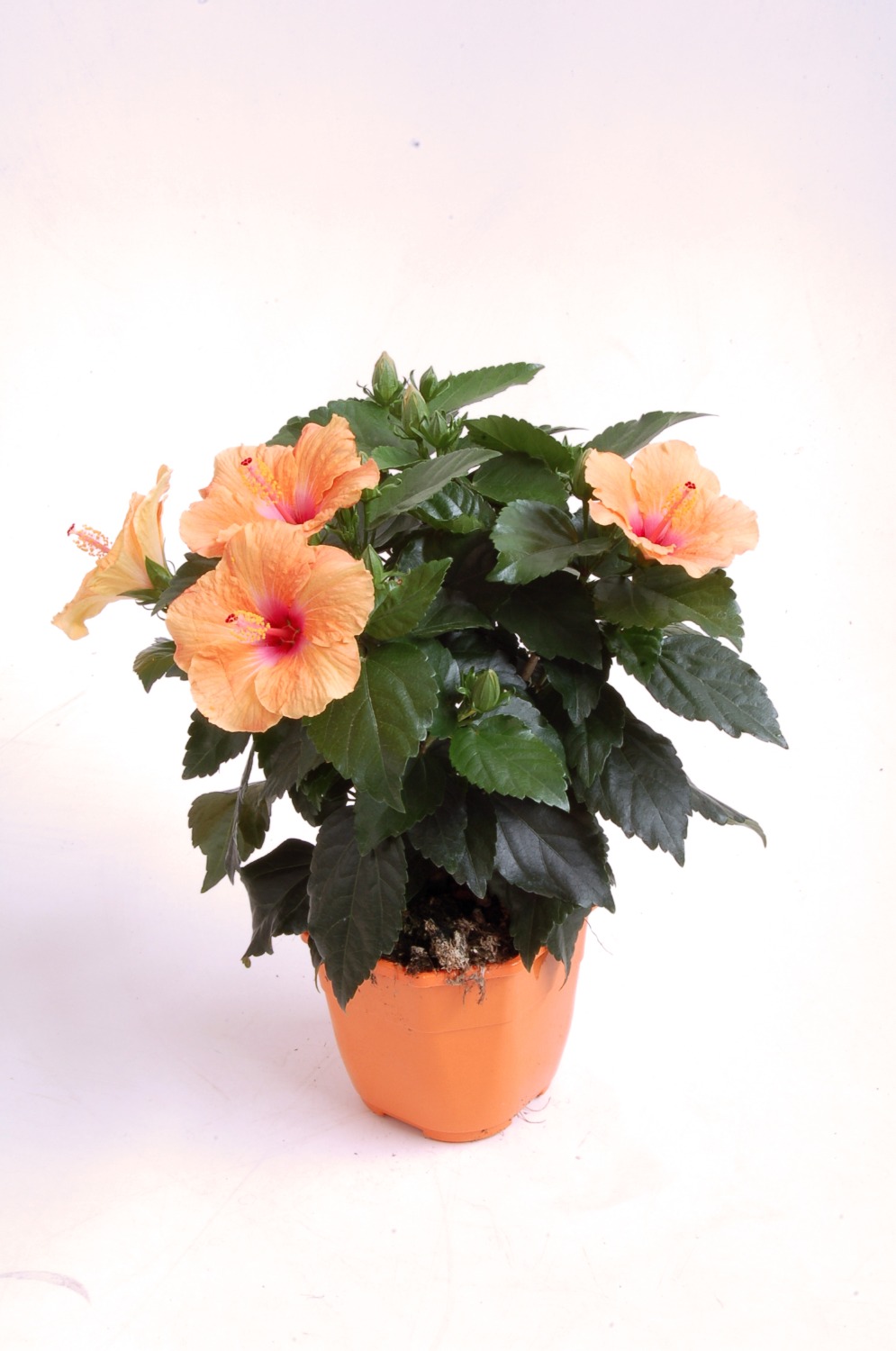
The Chinese Hibiscus is prized for its spectacular, brightly colored flowers, which range from white and yellow to orange, red, and vibrant pink. These attractive indoor and container plants are available with either single or double blooms and display a variety of leaf shapes and sizes.
Hardy Perennial Hibiscus (Hibiscus × moscheutos)
Although still relatively uncommon in Europe, perennial hibiscus cultivars are becoming increasingly popular. They typically grow between 120 and 200 cm (4–6.5 feet) tall and produce spectacular flowers from July to October.
Their blooms can reach an impressive diameter of up to 30 cm (12 inches), making them among the largest flowers found in ornamental gardens. Flower colors range from pure white and soft pink to deep red and striking multicolored combinations.
Notable Species and Cultivars
Among the many hibiscus varieties available, those with single flowers tend to be more floriferous and resilient than double-flowered cultivars.
Recommended Garden Hibiscus Cultivars
- ‘Helena’ (Hibiscus syriacus) – Features elegant white flowers with a distinctive red star-shaped center.
- ‘Lady Stanley’ – A vigorous-growing variety suitable for larger gardens.
- ‘Red Heart’ – A more compact cultivar ideal for smaller spaces.
- ‘Blue Bird’ (Hibiscus syriacus ‘Blue Bird’) – Produces attractive blue flowers and is particularly winter-hardy, making it an excellent choice for colder climates.
A Rare Chinese Hibiscus
One of the most unusual cultivars is ‘Cooperi’ (Hibiscus rosa-sinensis ‘Cooperi’). While its red flowers are relatively small, its striking variegated foliage in shades of white and green makes it a true eye-catcher.
Because of its tropical origins, ‘Cooperi’ requires relatively high humidity levels to thrive indoors.
A Garden Favorite
With their spectacular blooms, long flowering season, and wide variety of colors and forms, hibiscus plants are among the most rewarding ornamental shrubs and container plants. Whether grown indoors, on a terrace, or as a focal point in the garden, they bring a touch of exotic beauty and vibrant color wherever they are planted.