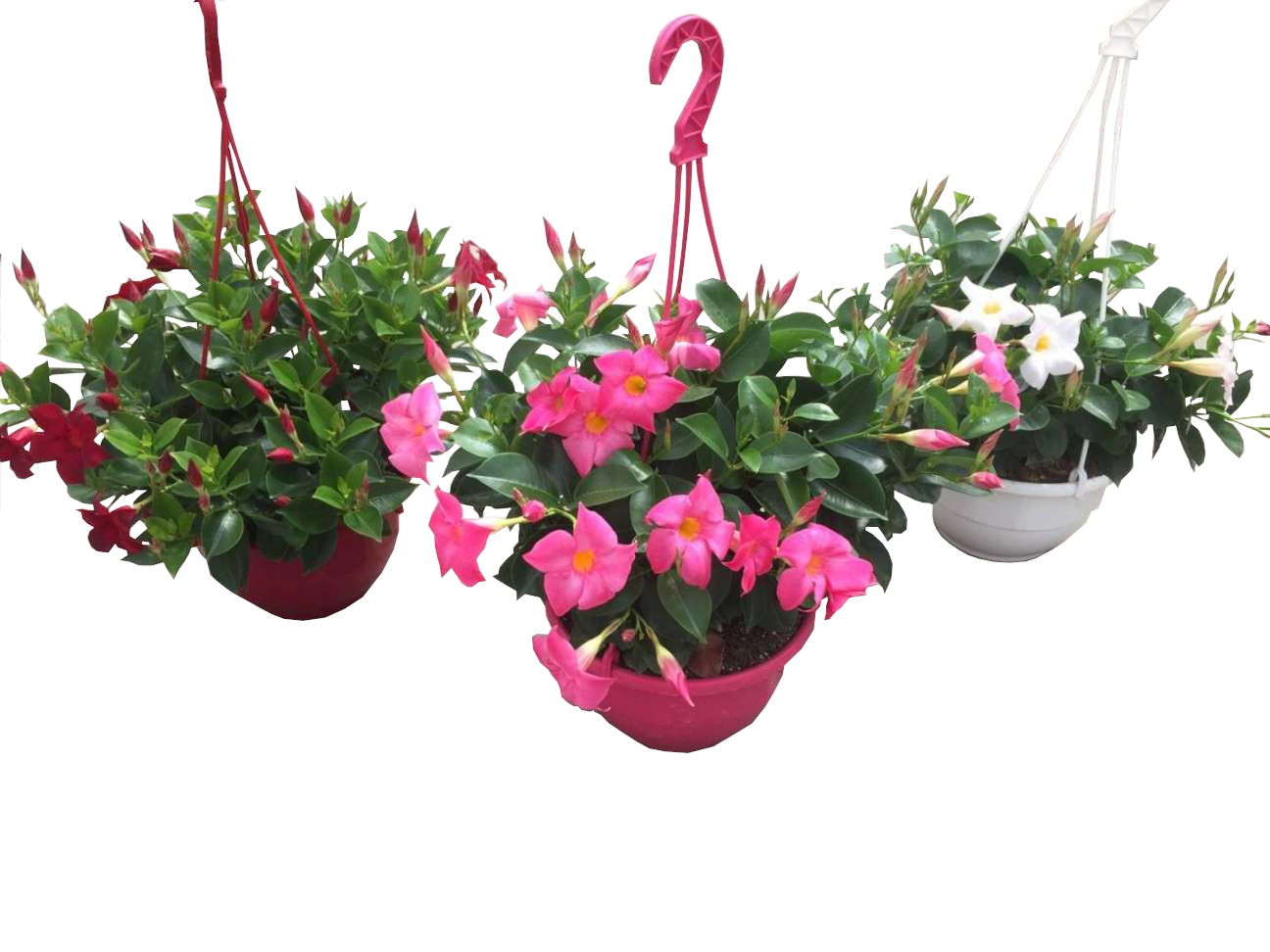
DIPLADENIA (MANDEVILLA)
Origin
Dipladenias (Mandevilla) are climbing shrubs from the dogbane family (Apocynaceae). They originate from the rainforests of South America and have been popular in Europe for over 100 years as container and potted plants. Throughout most of the summer, the beautiful white, pink, red, or yellow flowers of these evergreen climbing plants decorate balconies and terraces. The plant, commonly now referred to as Mandevilla (named after Henry John Mandeville), is often still known under its older botanical name “Dipladenia.”
More than 120 species of Dipladenia are known. Most plants cultivated here are compact hybrids of the wild species Mandevilla sanderi, into which other species such as Mandevilla splendens or Mandevilla boliviensis have been crossed. A special outdoor form is Mandevilla laxa, also known as Chilean jasmine, which is more tolerant of cooler temperatures and has white flowers.
Appearance and Growth
Evergreen Dipladenias are fast-growing climbing shrubs that quickly twine upward when provided with sufficient nutrients. Depending on the variety, these vine-like climbers can reach up to six meters in height. For balconies and windowsills, commercially available plants are often treated to remain compact. This growth control keeps them small and dense—however, usually only in the first year. After overwintering in the second year, when the growth-regulating treatment has lost its effect, they tend to grow significantly more vigorously.
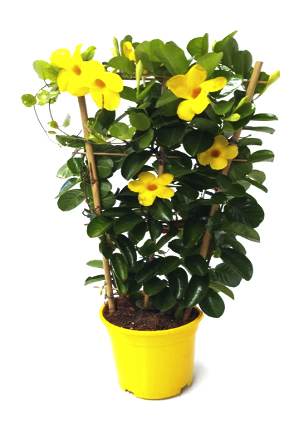
The dark green, glossy leaves are borne on short stalks and are slightly hairy. The leaves contain glands that are not visible to the touch. When leaves or stems are damaged, a white milky sap is released. It tastes bitter and, like all parts of the Dipladenia, is mildly toxic. The five sepals of Mandevilla open into funnel-shaped flowers up to five centimeters wide in white, yellow, violet, and various shades of red. Dipladenia blooms from May until autumn, continuously producing new buds throughout the summer. New cultivars show particularly abundant flowering. The white flowers of the evergreen Mandevilla laxa also emit a pleasant fragrance. Pollination is mainly carried out by bees and bumblebees, and in its tropical habitat also by hummingbirds.
After flowering, capsule fruits develop containing elongated, hairy seeds. To encourage more abundant flowering, it is advisable to remove developing fruits, as this prevents unnecessary energy consumption by the plant.
Species and Varieties
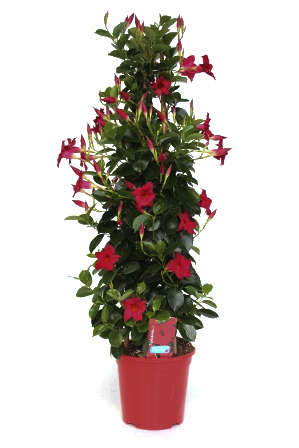
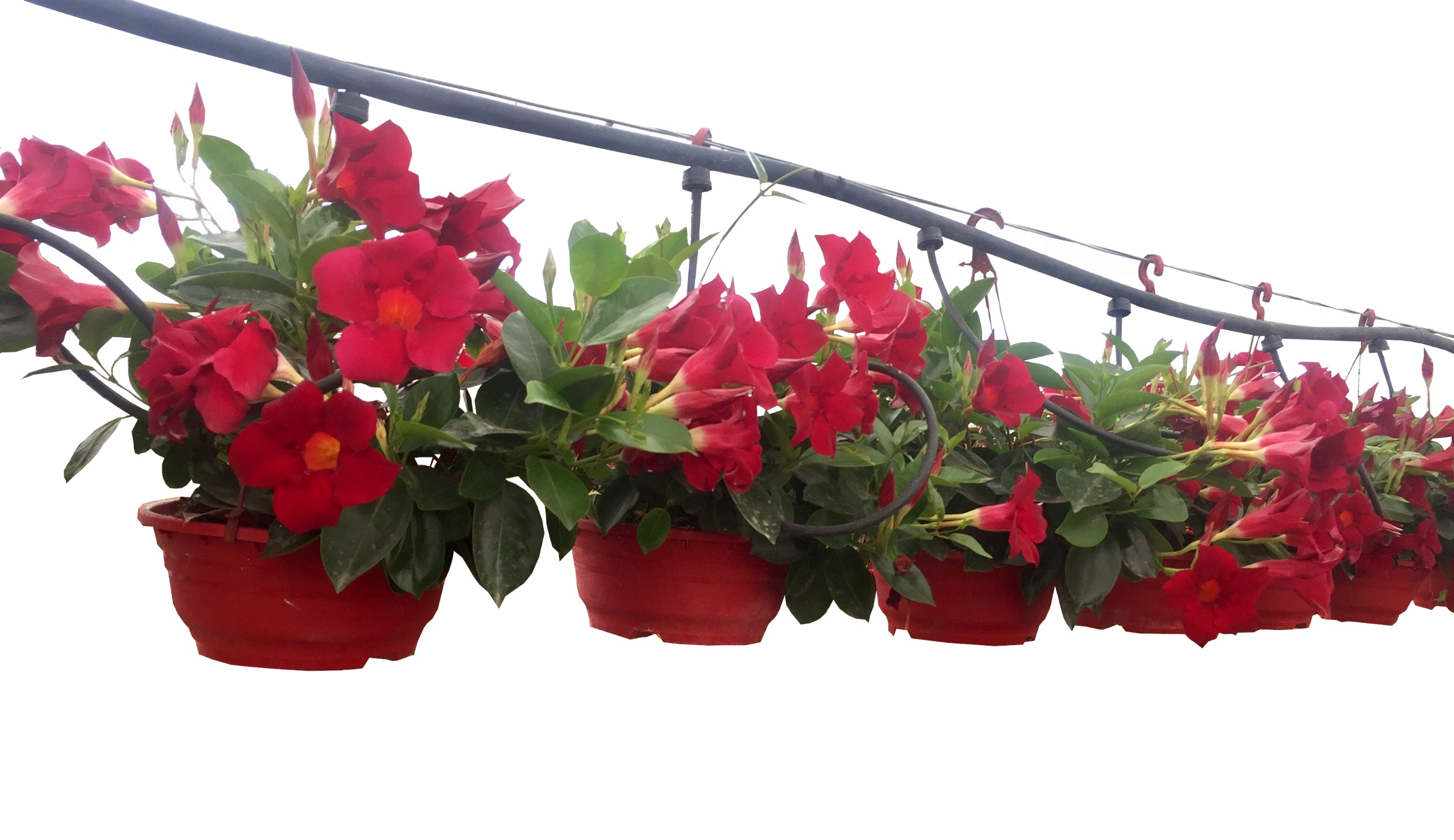
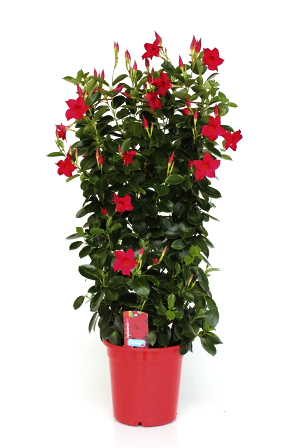
Especially drought-resistant varieties include the Mandevilla sanderi hybrids ‘Sundaville’ and ‘Tropidenia’. Some compact varieties from the ‘Jade’ series are excellent for window boxes. Climbing types such as Chilean Mandevilla (Mandevilla boliviensis) are ideal for covering trellises or structures and work well as privacy screens. Small-growing varieties like ‘Diamantina Jade White’ in white or ‘Jade Scarlet’ in fiery red are suitable for hanging baskets. The award-winning hybrid variety ‘Diamantina Opale Yellow Citrin’ features a trailing climbing habit. The pink Mandevilla × amabilis ‘Alice du Pont’, with funnel-shaped flowers up to ten centimeters wide, is considered the most large-flowered Dipladenia. It is vigorous and produces meter-long shoots that can be trained along a support. The Mandevilla hybrid ‘Sundaville Red’ thrives in heat, tolerates drought, and produces velvety red flowers throughout the summer. When trained on a trellis, it reaches about 150 centimeters in height.