CORDYLINE AUSTRALIS
Origin
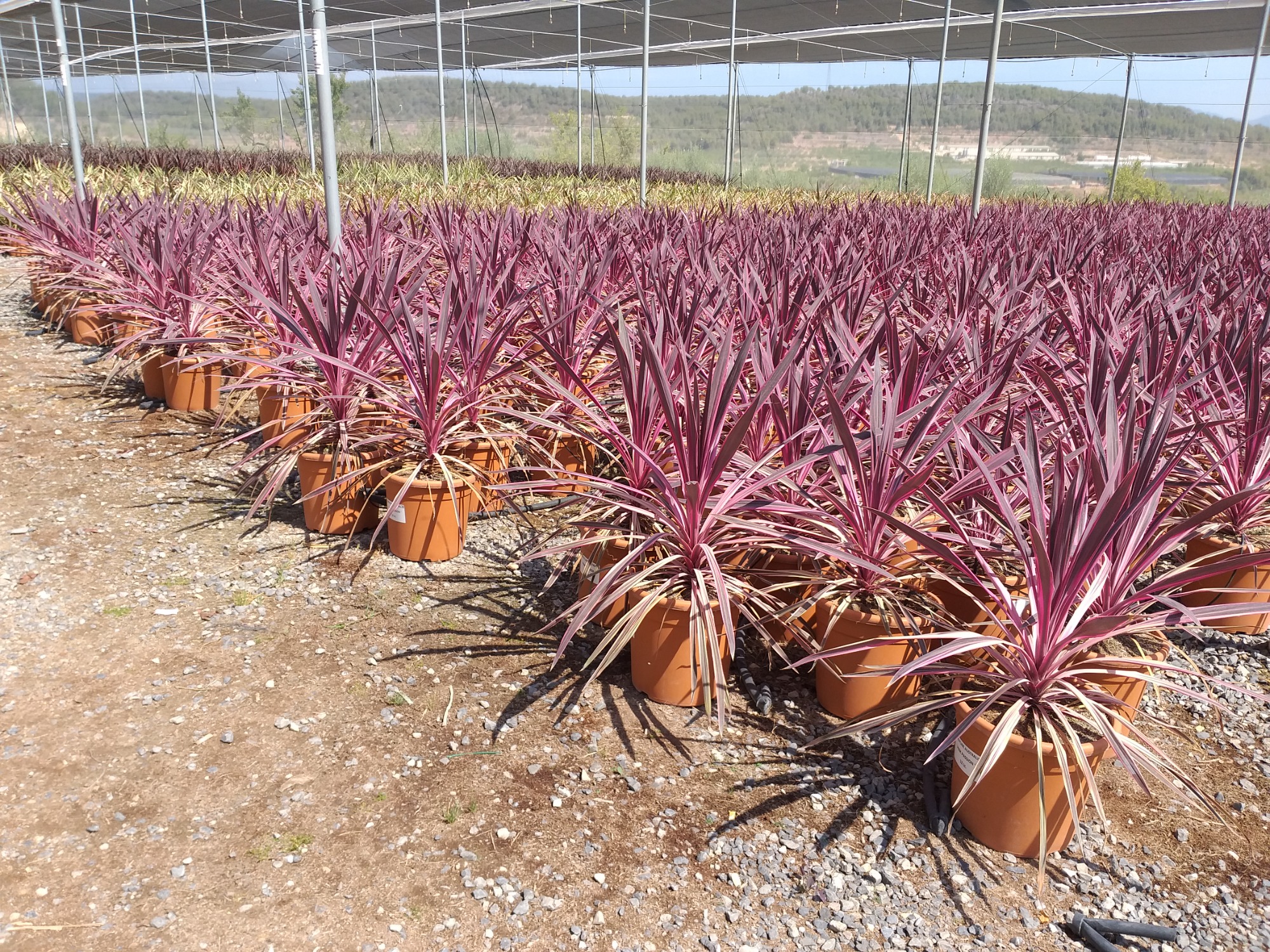
Cordyline australis is naturally found in the humid forests of Australia and New Zealand. It was introduced to England in 1823 and from there it spread to other regions. Today, it is a popular container plant that brings an exotic feel to balconies and patios. Cordyline australis belongs to the agave family (Agavaceae). Some varieties of Cordyline australis have colored leaves, often red. For this reason, they are mainly used in frost-free regions as ornamental plants in parks and gardens, but also as indoor plants, for example in greenhouses.
Growth habit
This species of Cordyline has a growth pattern similar to Dracaena, with which the genus is also closely related botanically. Sometimes Cordyline australis is also referred to by its synonym Dracaena australis. The tuberous plant forms a slender, bare trunk with a terminal rosette of green, red, or patterned leaves depending on the variety. In our region, it can reach up to three meters in height. Cordyline is characterized by storage tubers in the shape of clubs in its roots. The roots are white, which clearly distinguishes them from the orange or yellowish roots of Dracaena, which are very similar.
Flowers
In mid-summer, Cordyline produces striking creamy white flowers in richly branched panicles up to one meter long, which are lightly scented. When the plant fades, new shoots branch out at that point.
Location
Cordyline should be planted in a sunny or partially shaded location. Although the potted plant also tolerates a shady spot, the foliage will not be as dense. Cordyline may also grow crooked if there is too little light.
Varieties
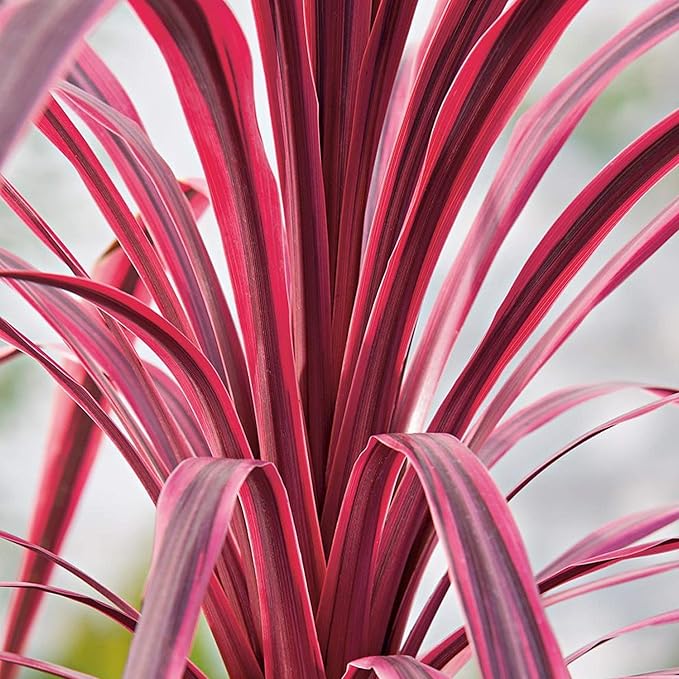
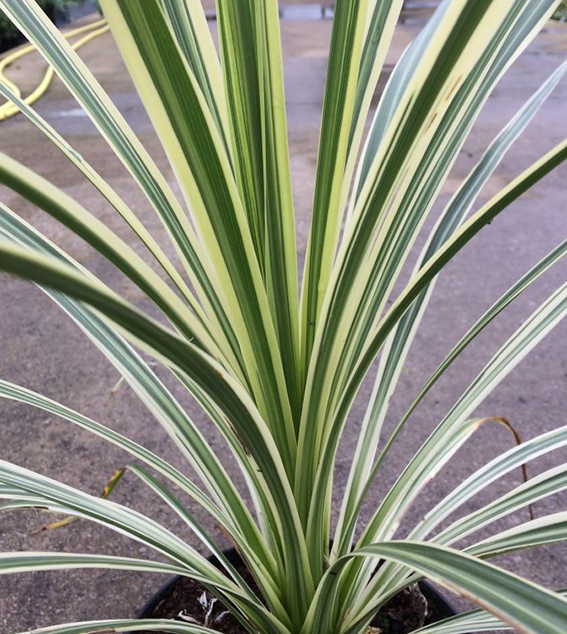
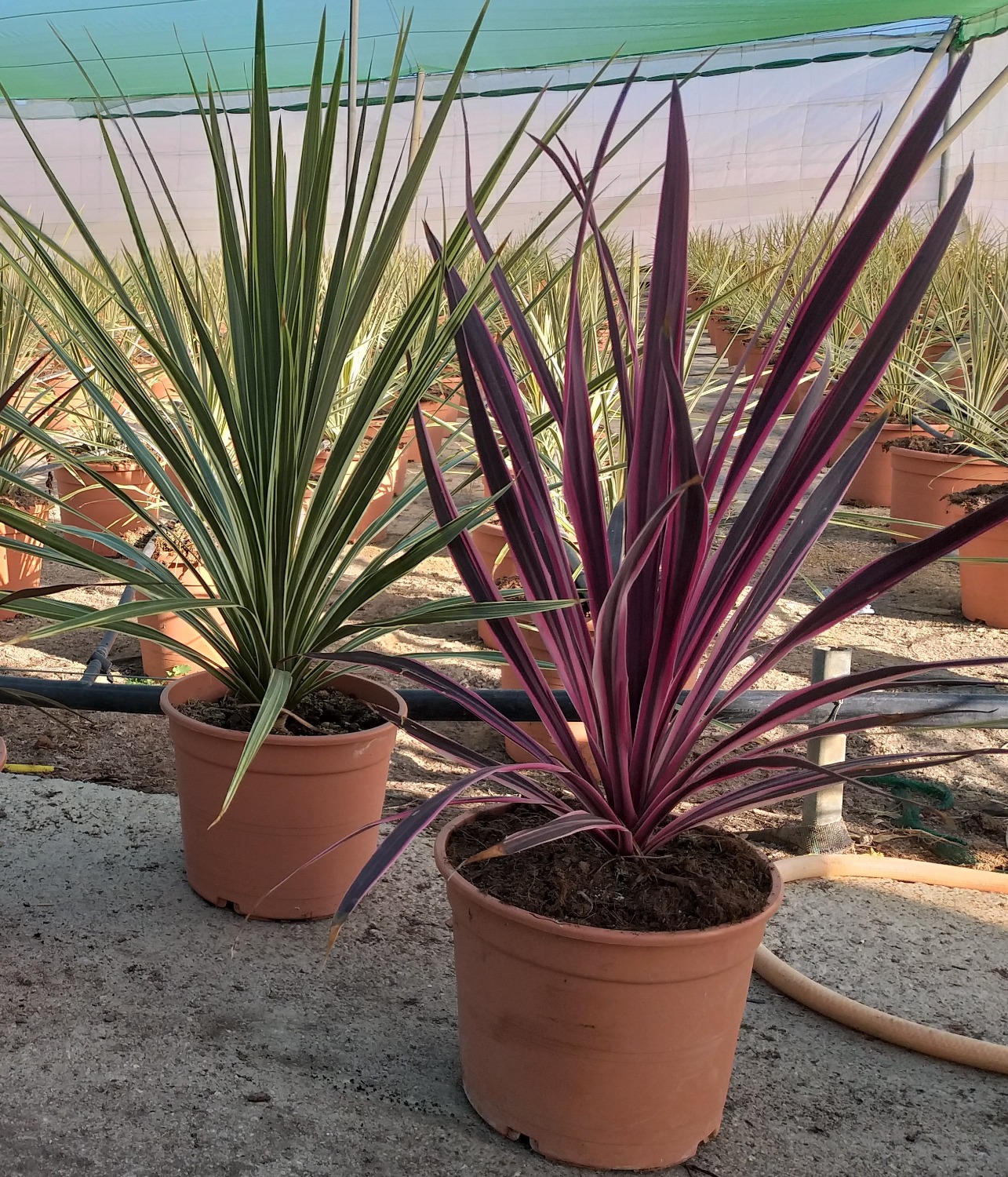
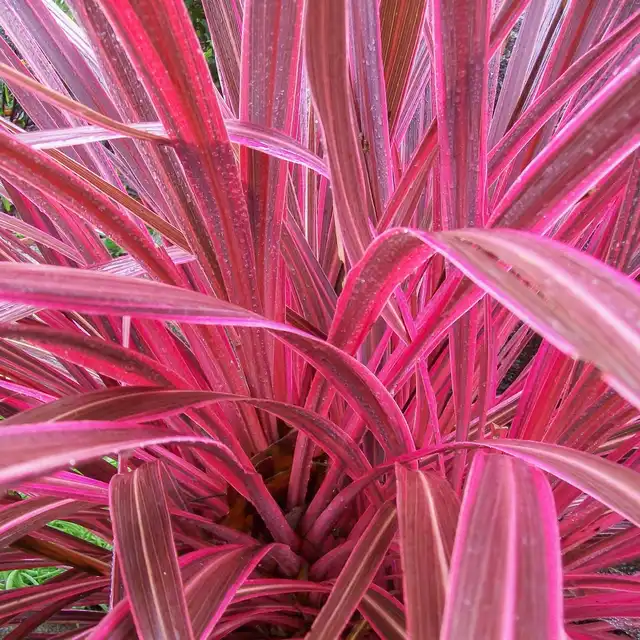
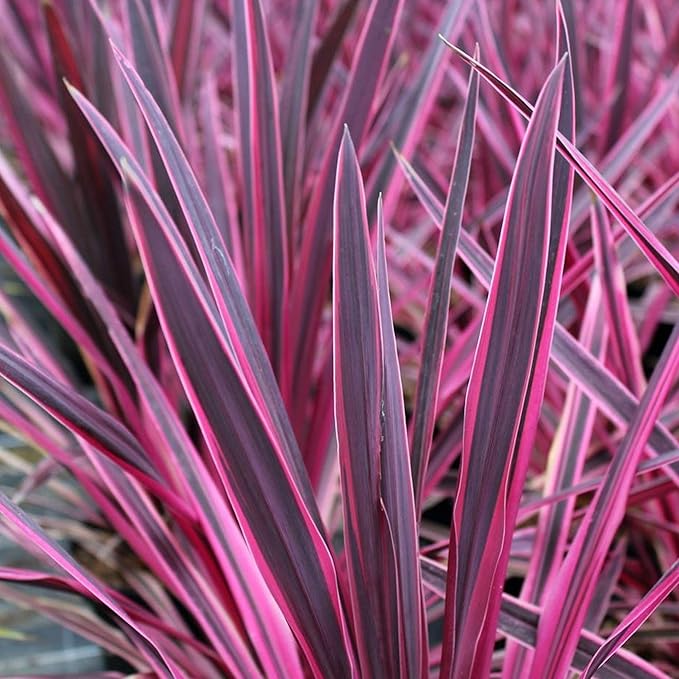
The different varieties of Cordyline are distinguished by the shape and color of their leaves. ‘Aureostriata’ is characterized by its yellow-green striped leaves. ‘Lineata’ has somewhat broader leaves with a purple base. ‘Purpurea’, also known as ‘Atropurpurea’, is popular for its crown of purple to brown leaves. The ‘Red Star’ variety also has reddish foliage. The ‘Southern Splendour’ variety is also striking due to its bold red and purple striped foliage.
(Source: mein-schoener-garten.de)