Canary Island date palm (Phoenix canariensis)
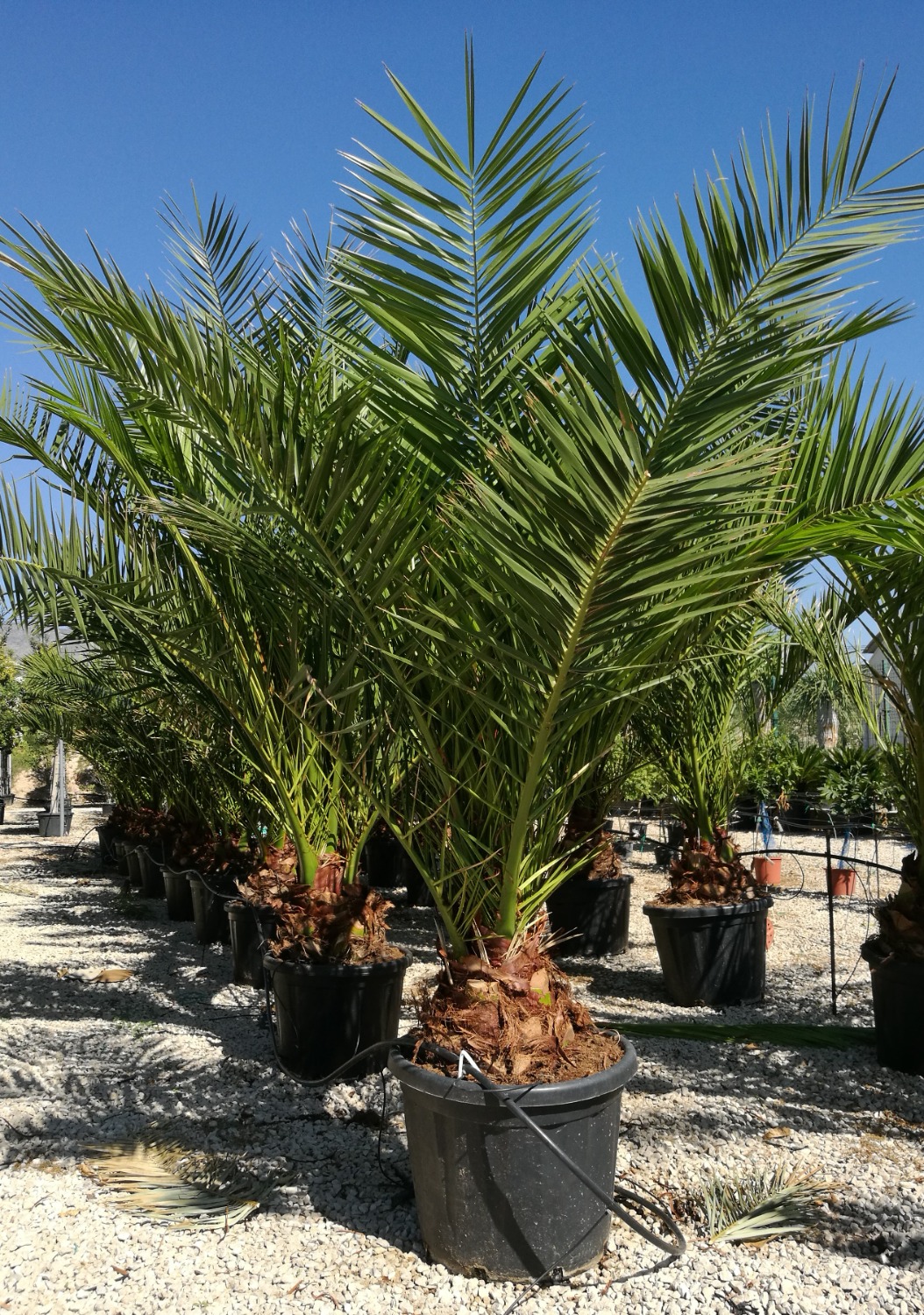
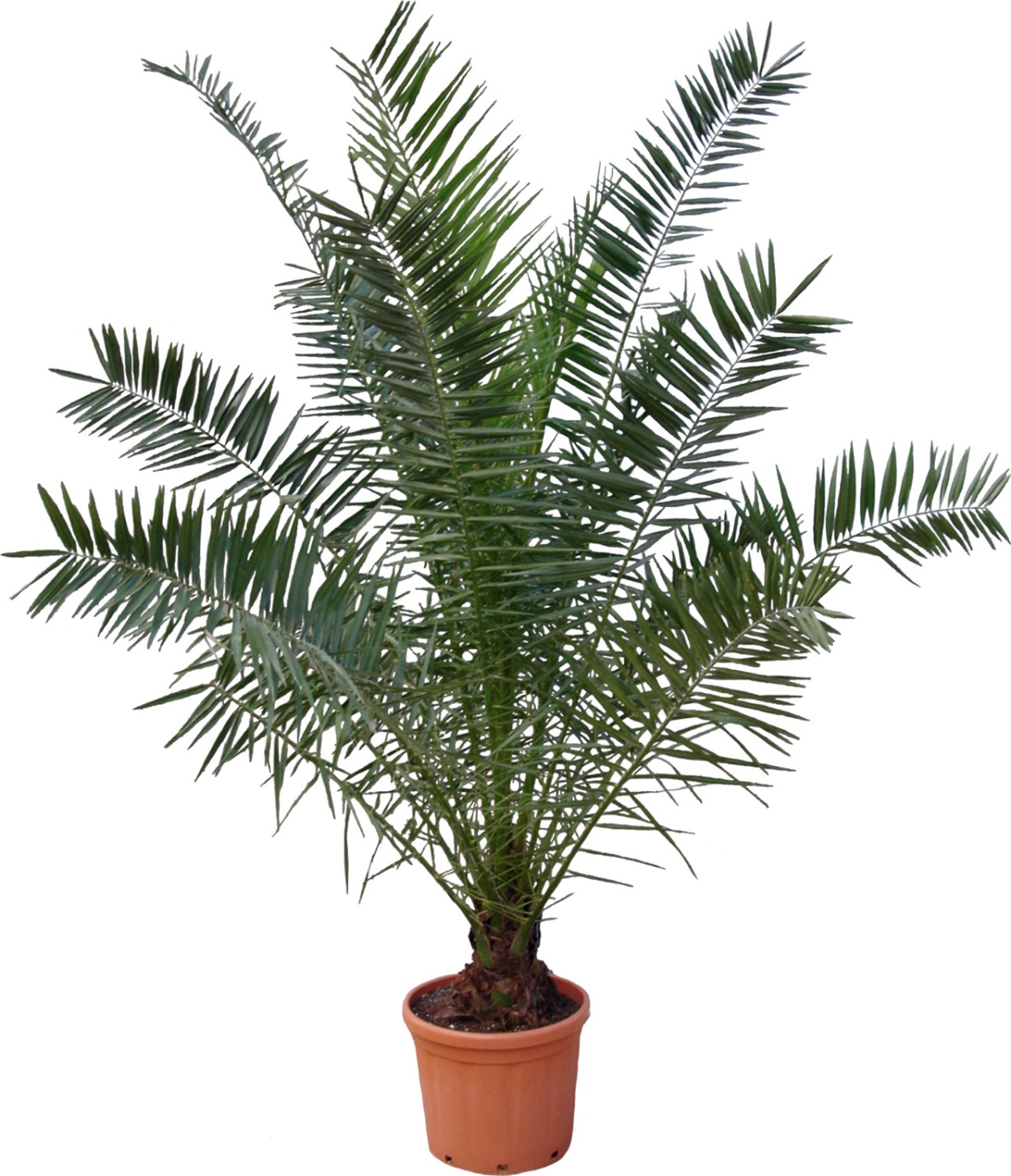
The Canary Island date palm (Phoenix canariensis) is native to the Canary Islands and is therefore also known as the Canary Island date palm. This decorative feather palm can reach a height of up to 15 meters. Older specimens develop a very thick trunk. In indoor cultivation, it grows slowly and typically reaches only about 2 meters in height. Its crown is adorned with feather-like, deep green fronds that gently arch outward from the central rib, creating an attractive focal point.
It can also be grown year-round in enclosed indoor spaces, stairwells, and reception halls, provided there is sufficient light. In our regions, the Phoenix canariensis is a very popular container palm, bringing a holiday feeling into your home with its numerous long fronds.
The Canary Island date palm is one of the best-known palms and is also suitable for beginners, as it is relatively easy to care for and very robust. Care mistakes are quickly forgiven, and this beautiful Phoenix is often the starting point of an impressive palm collection.
Proper care
Phoenix palms love the sun and thrive in summer in a bright outdoor location with high temperatures and strong sunlight. They do not perform well in partial shade and will grow only weakly there. During the main growing season, their water needs are very high. In warm summer months, the Phoenix therefore benefits from frequent and generous watering, rewarding you with strong growth and healthy plant structure. During the winter dormancy period, watering should be reduced significantly. When watering, always ensure that excess water can drain freely. If water collects in the plant saucer, it can lead to harmful root rot. At the same time, the plant does not tolerate complete drying out of the root ball.
Ideal overwintering
Date palms grown outdoors and acclimatised to the climate are considered frost-hardy down to about -7°C. However, container-grown palms should be moved indoors when nighttime temperatures drop below 0°C, even though older specimens can tolerate some frost. Short periods of frost around -6 to -8°C are usually not a problem. A frost-free, unheated room is ideal for overwintering. A protected winter location with temperatures between 5 and 10°C ensures the well-being of the palm. Slightly shadier conditions are acceptable during winter dormancy. During this cool overwintering period, the Phoenix requires only minimal watering.