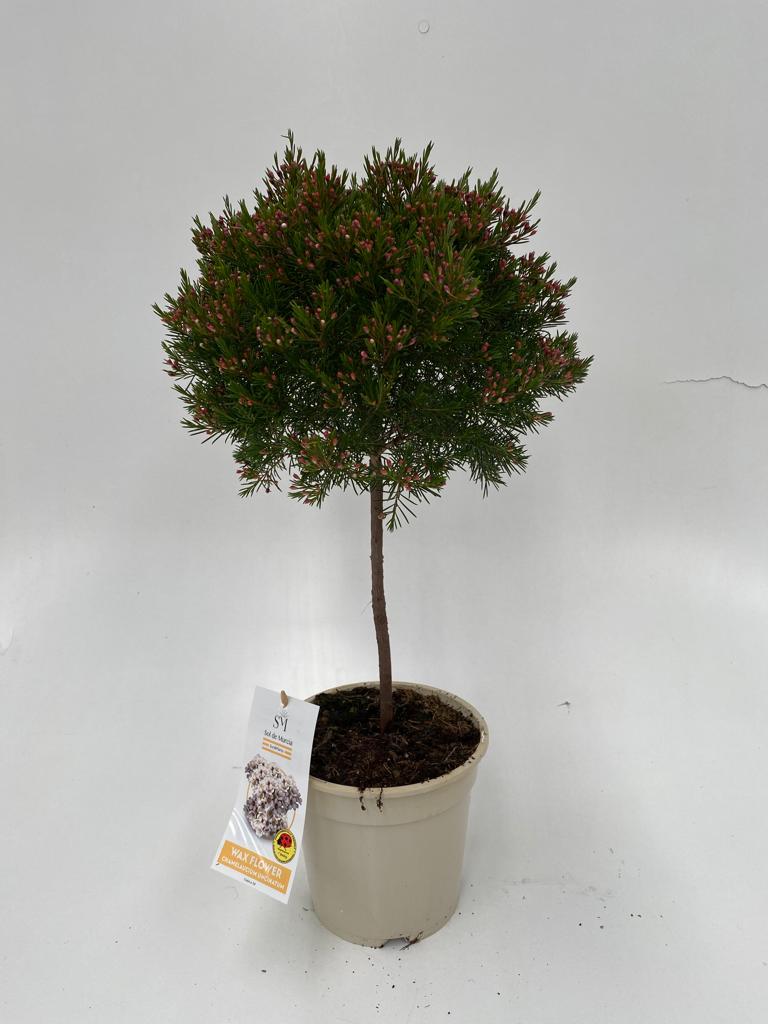
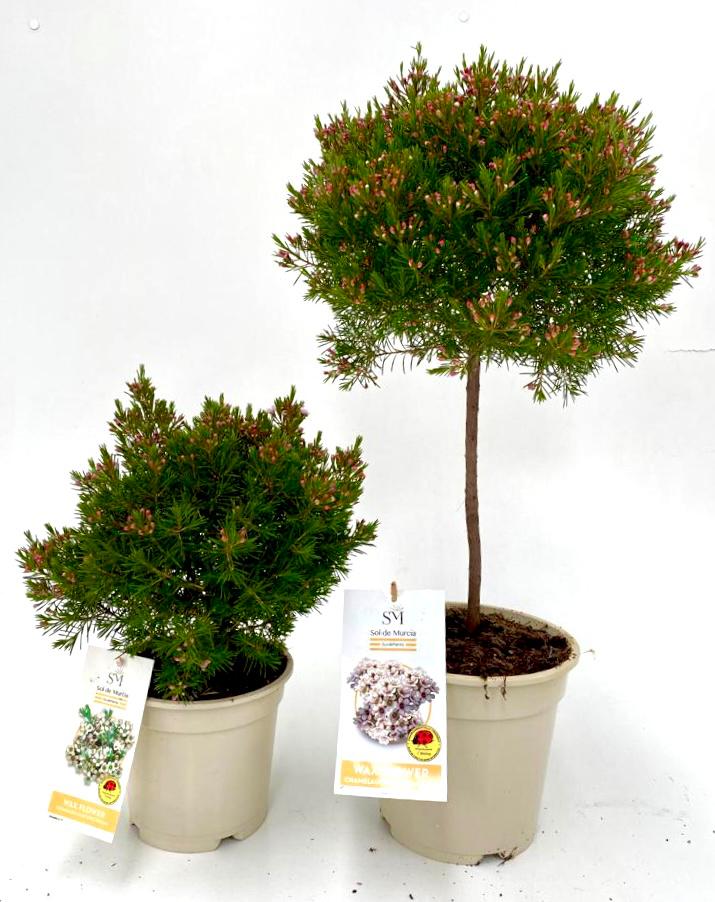
WAXFLOWER (Chamelaucium uncinatum)
The Chamelaucium uncinatum, also known as the waxflower, is a shrub that produces quite striking flowers and belongs to the Myrtaceae family. It is a plant native to western Australia and has spread both naturally to other regions of Australia and commercially to the Mediterranean region and North America.
The main focus of this plant is the large number of flowers it produces, which have a wax-like texture that completely envelops them, although its needle-like leaves are also highly valued. It is a representative shrub of Australian flora and is cultivated as an ornamental flower used in horticulture and floristry.
Characteristics of Chamelaucium uncinatum
The flowering phase of Chamelaucium uncinatum begins with the formation of buds, which develop into its striking flowers made up of five connected petals. These can be found in pink, white, and even purple varieties.
To cultivate this plant, it is important to know that it adapts well to fairly dry climatic conditions. It has low water requirements and is therefore able to withstand dry periods. In addition, it has a relatively long flowering period, remaining vibrant for up to 60 days, and it can also tolerate light frost.
Currently, there are several species within the genus Chamelaucium, with Chamelaucium uncinatum being the leading species in the flower market. It is among the most commercially important species in much of Europe and includes around 50 varieties in different sizes and colors.
This is a long-lived shrub with many branches and an upright growth habit, reaching up to 4 meters in height and a crown width of up to 3 meters. Its branches consist of thin, woody stems densely covered with needle-like, light green leaves.
Its oppositely arranged leaves form the branches, and when rubbed together they release a delicate citrus aroma. The leaves are also needle-tipped, which is the origin of the name uncinatum.
From the last winter days until midsummer, it blooms abundantly. Its flowering process is influenced by photoperiod, and shorter days along with temperature drops can trigger blooming.
Once the flowers appear, they remain for an extended period. After pruning, they are especially valued in horticulture for their high economic importance. When the flowers mature, they produce small fruits with a bright red tone containing a single seed.
Habitat
This plant is found in coastal areas, slopes, wetlands, rocky regions, sandy soils, and the plains of Western Australia. In its native range, it grows wild, mainly in the western and southwestern parts of Australia.
Today, it is widely cultivated in various Australian regions from Perth to Kalbarri, and it is also present in the United States, especially in California.
It is commonly grown in home gardens, commercial plantations, and nurseries for cut flower production.
(Source: jardineriaon.com)