The origins of All Saints’ Day
Why we decorate graves with flowers on 1 November
In Spain, 1 November is far more than just a public holiday. It is a time for reflection and remembrance, and a deeply rooted cultural celebration. But how did this holiday actually come about, and where do the customs we observe today originate? A look back at history reveals the answer.
How it all began: The historical origins
The roots of All Saints’ Day stretch back to antiquity. Originally, the Christian Church celebrated the commemoration of the martyrs in the spring.
- The year 610 AD: Pope Boniface IV converted the famous Roman Pantheon into a Christian church. He dedicated it to the Virgin Mary and all the martyrs, and set the feast day for 13 May.
- The move to 1 November: In the 8th century, Pope Gregory III consecrated a chapel in St Peter’s Basilica to all the saints and moved the feast day to 1 November.
- The intention behind this: The aim was to commemorate all saints and martyrs – including those who do not have their own official day in the calendar year. In the year 835, Pope Gregory IV finally declared 1 November an official feast day for the entire Western Church.
The difference: All Saints’ Day vs. All Souls’ Day
Two days are often confused, even though they are actually separate:
- 1 November (All Saints’ Day): A celebration of the Church’s officially recognised saints and all those who are already in heaven.
- 2 November (All Souls’ Day): The actual commemoration of all deceased believers.
In Spain, the customs associated with both days have, over time, become centred on 1 November, as this is a public holiday.
Symbolism in Spain: A festival of colours in the cemeteries
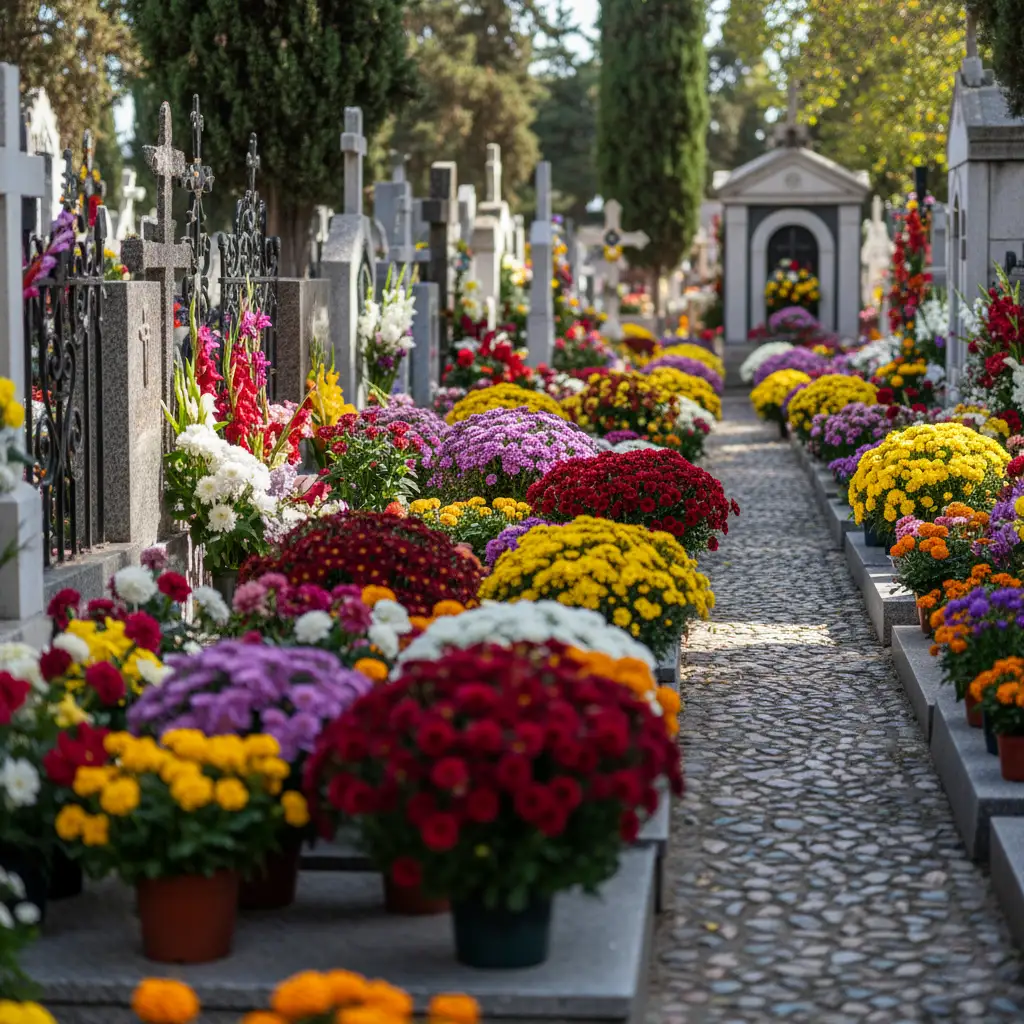
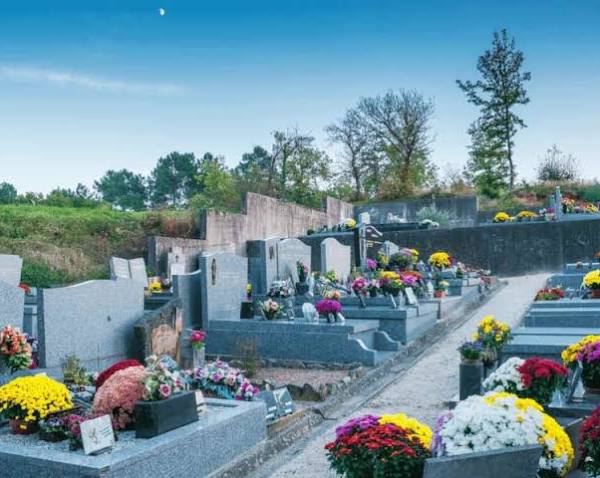
In Spain, this day has a very special, heart-warming atmosphere. It is not a day of sombre mourning, but a day of loving remembrance. The cemeteries are transformed from places of silence into a stunning sea of colours and scents.
In the Christian context, flowers symbolise the beauty of life, blossoming and the hope of resurrection. They show that the departed continue to flourish in the hearts of the living.
The most important plants and their significance in Spain
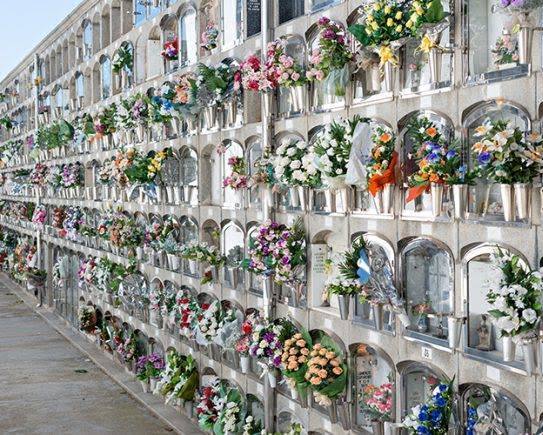
Every plant that adorns the graves and wall niches (nichos) on this day carries its own message:
- The carnation (Clavel): The soul of Spain
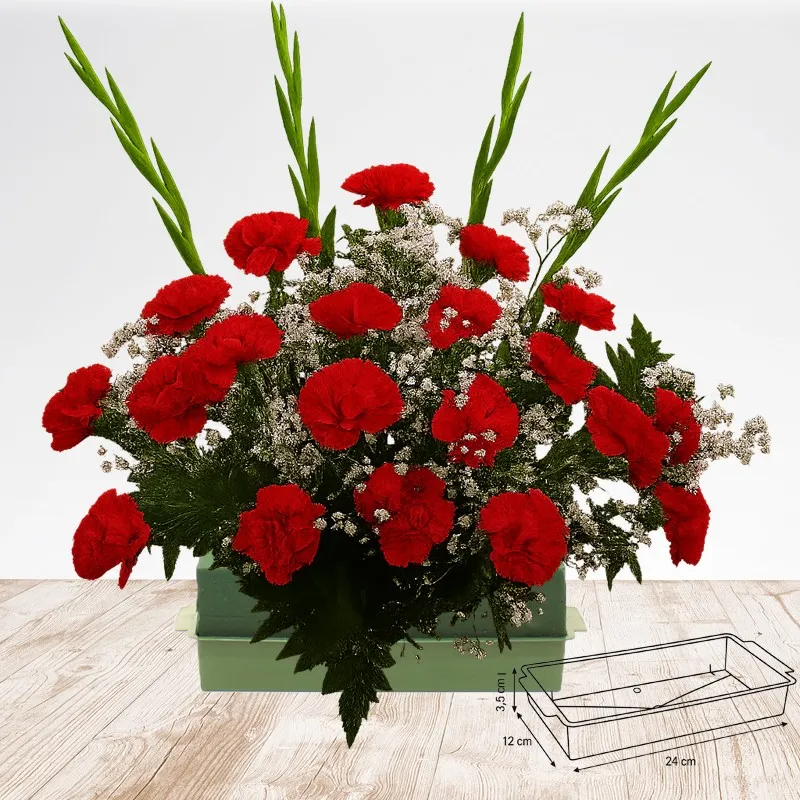
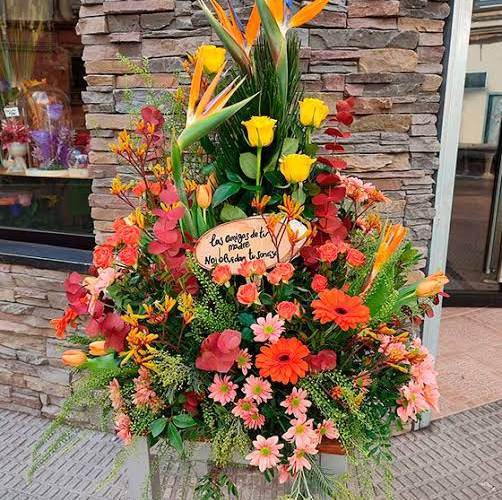
Alongside the classic autumn-flowering varieties, the carnation is the undisputed star of Spanish tradition. Like no other flower, it symbolises passion, deep affection and undying love for the departed. As carnations have a long cultural history in Spain, they are a symbol of enduring loyalty and deep family roots. Their variety of colours makes them perfect for artistic floral arrangements.
- The Strelitzia (Strelitzia reginae): Elegance and Eternity
Anyone walking through Spanish cemeteries in autumn will increasingly see the majestic ‘Ave del paraíso’ (bird of paradise flower). With its extraordinary, bird-like shape and vibrant orange and blue colours, it brings an exotic elegance to remembrance. The strelitzia symbolises paradise, spiritual greatness and the immortality of the soul. Its extremely sturdy structure also ensures that it can withstand the Spanish autumn sun for days on end.
- Classic harbingers of autumn: These are often complemented by hardy plants such as chrysanthemums (crisantemos) or gladioli, which traditionally represent sincerity and strength.
- The light of the souls: Alongside the lush splendour of the flowers, countless grave candles are lit. They symbolise the eternal light that illuminates the path for the souls.
When we walk through the colourfully decorated cemeteries on 1 November, we are taking part in a centuries-old tradition. It is a celebration that builds bridges: between the past and the present, underpinned by the timeless beauty of nature.
(Source: AI)